
60 trillion won winnings: Canada’s submarine business goes beyond tech…
sayfa bilgisi

metin
60 trillion won: Canada’s submarine business goes beyond technology into a war of ‘economic value’
Written on: June 24, 2026 | Column by current affairs critic specializing in IT/media
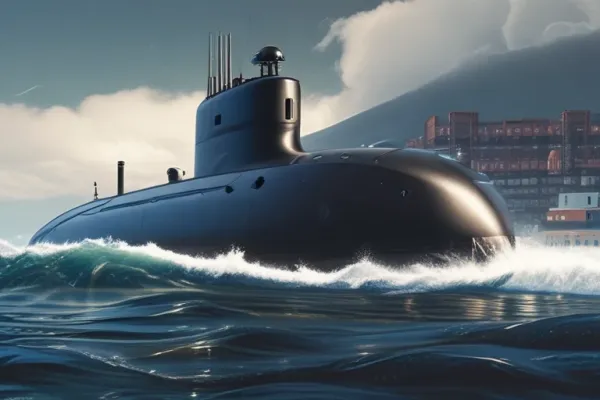
Canada's Next-Generation Submarine Project (CPSP), with an astronomical amount of 60 trillion won at stake, is heading toward its final destination. This order battle between a Korean consortium led by Hanwha Ocean and Germany's ThyssenKrupp Marine Systems (TKMS), a traditional powerhouse in the submarine field, has become an arena for enormous economic calculation that goes beyond a simple arms deal. Recently, Stephen Poor, head of Canada's Defense Procurement Agency, officially confirmed that both sides met the technical requirements, and the key variable that will determine victory or defeat has now been narrowed down not to the performance of cold steel, but to the size of the 'economic benefit' that can substantially revitalize the Canadian economy. Ahead of the final preferred negotiating partner to be announced at the end of this month, we would like to analyze the fierce behind-the-scenes competition between the two countries and its strategic implications.
The Canadian government's view on this project is very pragmatic. The introduction of 12 new submarines to replace the aging Victoria-class submarines is the largest defense investment since World War II, and is a golden opportunity for Canada to rebuild its domestic shipbuilding industry and revitalize its industrial ecosystem. In fact, Canadian authorities have already given both sides a passing grade for the submarine's performance itself, and are also allocating 50% of the evaluation weight to logistics support and maintenance capabilities and 15% to economic benefits and strategic value, and are closely watching the industrial impact. This can be said to be the result of Canada's strong will to improve the fundamentals of its economy by not simply purchasing excellent submarines, but also maintaining and repairing them for decades, creating local jobs, and transferring technology.
Korea’s strategy is summarized as ‘extensive package deals’ and ‘aggressive localization’. Hanwha Ocean is appealing to the Canadian government by promising to create economic opportunities worth 70 billion Canadian dollars, create 500,000 jobs, and contribute 100 billion dollars to GDP by 2044. In particular, the extensive business agreements (MOUs) signed with 67 local companies, including Blackberry and PCL Construction, send a strong message that Korea will establish itself as a partner of Canadian industry, not just an exporter. In addition, the government's comprehensive incentive strategy, such as 'Project Beaver', which builds hydrogen cargo trucks and infrastructure, is increasing the possibility of winning orders by proving that Korea is capable of deep cooperation with Canada not only in the defense industry but also in the energy and future mobility fields.
German TKMS is fighting back by using ‘qualitative excellence’ and ‘NATO alliance solidarity’ as its weapons. They promise to create $160 billion worth of economic activity and more than 650,000 jobs, presenting figures that do not lag behind in terms of volume, while using a ‘qualitative differentiation’ strategy that emphasizes deep cooperation with key companies rather than the quantity of partnerships. In particular, Germany's political and diplomatic ties as a member of NATO are powerful weapons. The proposal to share proven submarine maintenance facility design experience through cooperation with Norway constantly reminds the Canadian Navy of who its long-term, reliable ally partner is and keeps Korea in check in a rapidly changing international security environment.
From Korea’s perspective, this project has special meaning in that it goes beyond simple sales increase and is a bridgehead for entry into the ‘NATO market.’ As Minister of Trade, Industry and Energy Kim Jeong-gwan mentioned, the prevailing assessment is that Korea has the upper hand in terms of objective submarine performance and industrial cooperation package, but it is too early to be optimistic as the defense industry business cannot be separated from diplomatic decisions. The domestic defense industry ecosystem is maximizing competitiveness through technological advancement, with Ulsan City recently accelerating the development of hydrogen fuel cell technology for next-generation submarines in cooperation with HD Hyundai Heavy Industries and others. If this technological pride and economic cooperation card match Canada's strategic decision, Korea will achieve a feat that will mark a new milestone in the history of global submarine exports.
■ Conclusion and analysis outlook
Canada’s next-generation submarine project is a clear example of how important ‘economic partnership between countries’ is in the modern defense industry market where technological capabilities have been upgraded. The final results, which will be announced later this month or around the NATO summit in July, will determine whether Hanwha Ocean's challenge bears fruit or whether Germany's traditional ties will succeed in its defence. Regardless of the outcome, this contract win served as an opportunity to show the world that the Korean defense industry has world-class technology and business performance capabilities. The attention of the global defense industry is focused on the North American continent as to who Canada will choose as the main character of ‘real economic performance’.
* This post is a commentary by PlayBBS that analyzed real-time Google Trends popular search terms and related major articles.
- Önceki gönderiA battle on the 60 trillion won ocean: Canada's submarine business, a huge test bed for K-Defense 26.06.29
Yorum listesi
Kayıtlı yorum yok.