
A value of 120 million won, the 100-year mystery of Mt. Jangan and the…
ข้อมูลหน้า

ข้อความ
Value of 120 million won, 100 years of mystery of Mt. Jangan and the future of wild ginseng research
Written on: June 25, 2026 | Column by current affairs critic specializing in IT/media
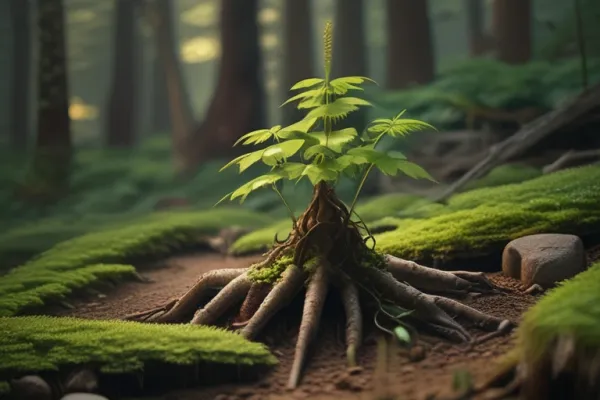
A precious treasure beyond the imagination of modern people was discovered in a deep valley 950 meters above sea level, covered in thick fog, and in the virgin forest of Jangan Mountain in Jangsu-gun, where no one was allowed to visit. Cheonjong wild ginseng with eight roots, captured through the eyes of a herbalist in his 50s, has value beyond a simple medicinal herb and is attracting public attention. These wild ginsengs, which have survived for over 100 years through natural reproduction for more than four generations, remind us of the wonders nature presents to humans. This discovery went beyond simple economic value and served as an opportunity to reexamine the scarcity and ecological value of medicinal resources growing naturally in our land.
The 8 roots of Cheonjong wild ginseng, which have been carefully evaluated by the Korean Traditional Shimani Association, are evaluated as by far the best among the wild ginseng discovered this year. These wild ginsengs, weighing a total of 76g, are of great academic and ecological value in that they have been passed down from generation to generation in a natural state centered around the mother ginseng, the largest wild ginseng mother. Cheonjong wild ginseng is a being that has grown by overcoming the wild environment on its own without any artificial cultivation or transplantation process. In particular, given the nature of Cheonjong wild ginseng, which is based on an age of more than 50 years, the presence of 100-year-old mother ginseng is also an indicator of how long the Jangan Mountain ecosystem has been healthy and preserved.
This discovery once again proves the rarity of wild ginseng and has become a hot topic with an appraised value of 120 million won, but experts are paying attention to its shape, color, and vitality. Wild ginseng is a sensitive plant whose genetic characteristics and active ingredients vary greatly depending on the soil composition, altitude, and climatic conditions of its native place. The excellent appearance of the newly discovered individuals suggests that the subtle environmental factors in the deep valley of Jangan Mountain provided optimal conditions for the growth of wild ginseng. Rather than simply being the result of luck, the discovery of natural wild ginseng should be viewed as a product of nature's vitality accumulated silently over a long period of time.
Meanwhile, efforts are being made actively in our industry to break away from the view that wild ginseng is simply an object of windfall for ‘planting it’ and to use it as a systematic data and research asset. Bio companies such as Bogo Bio are continuing scientific research by conducting genetic fingerprint analysis based on samples of over 800 wild ginseng roots collected from around the world. In the past, authenticity was determined based on Simmani's experience and visual inspection, but now we have entered an era in which the ingredients and genetic value of wild ginseng can be precisely identified through DNA analysis technology. These technological advances go beyond the indiscriminate consumption of rare wild ginseng and serve as a foundation for standardizing the efficacy of wild ginseng and using it as a health functional food or raw material for therapeutic agents.
For researchers, a single wild ginseng root is like a vast biological database in itself. The ingredient data and genetic information accumulated during the growth process of wild ginseng are directly connected to key source technologies in the bio industry, such as aseptic culture technology and mass production of cultured wild ginseng roots. In particular, patented technology for determining the authenticity of wild ginseng plays a critical role in ensuring the reliability of research, making it possible to develop standardized products such as Wild Ginseng Bichaek. Ultimately, the 100-year-old wild ginseng discovered in Jangan Mountain and the 800 root samples stored in the research center are being reborn as valuable assets for improving human health at the intersection of natural wisdom and modern science.
■ Conclusion and analysis outlook
The 100-year-old Cheonjong wild ginseng discovered in the deep embrace of Jangan Mountain simultaneously reminds us of the greatness of nature and the importance of its preservation. It is very encouraging that life forms that nature has created over centuries are going beyond human curiosity and economic value and are advancing into the wider world through scientific research. What we must do in the future is not to consume these natural products for short-term profit, but to systematically record and manage the genetic information and ecological values contained in them. We hope that the mystery of nature will be reborn as an innovative asset for the future of humanity through the power of science.
* This post is a commentary by PlayBBS that analyzed real-time Google Trends popular search terms and related major articles.
- โพสต์ก่อนหน้าGuests coming in July, the ‘late rainy season’ caused by climate volatility and our response 26.06.25
- โพสต์ถัดไป31st birthday, ‘5.5 billion’ congratulatory fire to be fired from the green: Kim Si-woo’s Challenge for the Travelers Championship 26.06.25
รายการความคิดเห็น
ไม่มีความคิดเห็นที่ลงทะเบียน