
Healthcare outside the hospital, ‘Connected Care’ in the AI era envi…
ข้อมูลหน้า

ข้อความ
Healthcare outside of hospitals, ‘Connected Care’ in the AI era envisioned by Samsung Electronics
Written on: June 22, 2026 | Column by current affairs critic specializing in IT/media
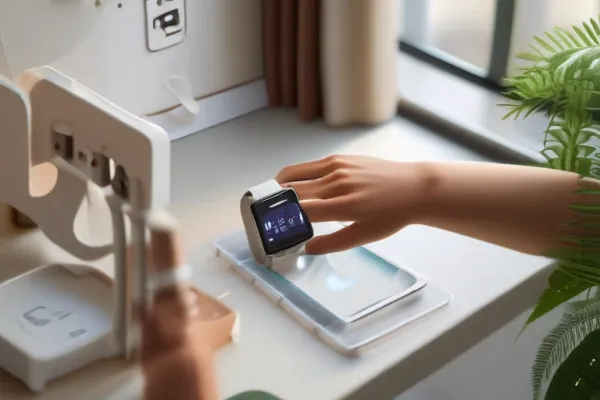
We are now entering an era where modern people’s health care starts from crossing the threshold of a hospital and is completed on the living room sofa. Rapid advances in artificial intelligence (AI) and Internet of Things (IoT) technologies are transforming the home appliances and wearable devices we encounter every day into personal doctors. ‘VivaTech 2026’, recently held in Paris, France, was the scene where Samsung Electronics, which is at the center of this change, declared its strong will to leap forward as a leader in the global digital healthcare ecosystem beyond a simple hardware manufacturer. We would like to take an in-depth look at how ‘Connected Care’ presented by Samsung Electronics will revolutionize our daily lives, and what their blueprint for future healthcare will look like.
The core of ‘connected care’ emphasized by Samsung Electronics at this expo is to transform the old medical paradigm centered on after-care treatment into a proactive preventive management system. The 77 million users of ‘Samsung Health’ and the more than 460 million subscribers of ‘Smart Things’ are Samsung Electronics’ most powerful weapon and a source of vast amounts of data. They integrate a broad hardware portfolio ranging from semiconductors to TVs, mobiles, and wearable devices into a single platform called SmartThings, which monitors users' sleep, activity, diet, mental health, and vital signs in real time. As the space called home transforms beyond a simple residence into a hub for digital health care, Samsung Electronics seeks to establish itself as a daily companion that supports a healthy life by providing automated routines tailored to the user's lifestyle.
However, Samsung Electronics' strategy is never completed alone. At this event, Samsung Electronics again emphasized the importance of an 'open ecosystem' by revealing close collaboration with innovative startups such as Xealth, Generation Lab, and Cyfox Health. For example, Generation Lab provides a solution to easily measure biological age at home, and Cyfox Health combines precision diagnosis technology through blood testing with Samsung devices to help provide professional health care outside of hospitals. In addition, through collaboration with XELS, we have established a bridge that allows medical staff to monitor patients' health status in real time and provide digital prescriptions remotely. This open innovation provides technological scalability to partners and provides users with a seamless healthcare experience that connects hospitals and daily life.
The technical foundation that supports the success of open platforms is also something to pay attention to. Samsung Electronics introduced the ‘Samsung Health SDK Suite’, which helps developers easily develop innovative services using cutting-edge sensors and health platforms. This is a core engine that creates a virtuous cycle in the ecosystem by allowing external partners to utilize Samsung's vast data to build more advanced health management algorithms. Moreover, as health data is very sensitive information, Samsung Electronics has applied its proprietary security solution ‘Knox’ not only to mobile devices but also to home appliances and TVs. A thorough security defense system allows users to share their health information with confidence and serves as a decisive competitive advantage that increases trust in the platform.
Meanwhile, behind these technological advancements and ecosystem expansion, there is an industrial foundation that is in line with Samsung Electronics' strategy of securing core talent. The popularity of the semiconductor contract department, which has recently surpassed Seoul National University's College of Natural Science in the entrance exam market and even threatens to pass the medical school admissions line, proves the social expectations for future technology held by a company called Samsung Electronics. Semiconductor technology, which attracts excellent talent, will soon become the basis for determining the performance of high-performance sensors and processing devices that Samsung Electronics will install in healthcare devices. This is because in order for healthcare in the AI era to evolve beyond the stage of simply collecting data and into an ‘intelligent assistant’ that predicts the user’s needs, the performance of hardware and the sophistication of software must be in harmony. Future healthcare will ultimately be won or lost based on how safely and intelligently the company with the best engineering capabilities handles human health data.
■ Conclusion and analysis outlook
Samsung Electronics' actions at VivaTech 2026 make it clear that healthcare has now become a new battleground in the information technology (IT) industry. Going beyond the medical approach to cure diseases, the digital healthcare ecosystem that prevents diseases and manages quality of life through daily data is a huge trend that cannot be resisted. Samsung Electronics is setting the standard in this market with its overwhelming device connectivity, open collaboration strategy, and strong security. In the next five years, when AI will arrive in an era where AI will understand the user's health status in advance and provide appropriate advice, Samsung's Connected Care is expected to become a support that supports a healthy life in the closest part of our daily lives.
* This post is a commentary by PlayBBS that analyzed real-time Google Trends popular search terms and related major articles.
- โพสต์ก่อนหน้าTechnological leadership in an era of high inflation: Samsung Electronics’ survival strategy and future blueprint 26.06.22
- โพสต์ถัดไปสงครามเต็มรูปแบบระหว่างศาลาว่าการกรุงโซลและ MBC: การต่อสู้เพื่อความจริงและการปะทะกันของมุมมองของสื่อรอบ ๆ รายงานเรื่อง 'เหล็กเส้นที่หายไป' 26.06.16
รายการความคิดเห็น
ไม่มีความคิดเห็นที่ลงทะเบียน