
The semiconductor supercycle launched by AI, reading the huge wave of …
ข้อมูลหน้า

ข้อความ
The semiconductor super cycle launched by AI, reading the huge wave of the KRW 1500 trillion market
Written on: June 21, 2026 | Column by current affairs critic specializing in IT/media
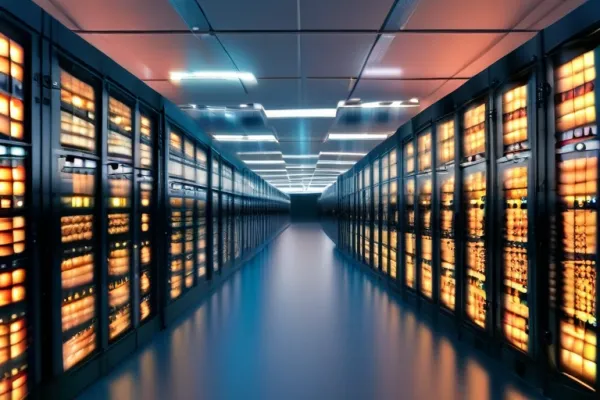
A huge technological inflection point called artificial intelligence (AI) is shaking the global industrial landscape to its core. Now, the global stock market and industry are converging on one keyword: semiconductors, and the demand for AI infrastructure that is surging in like a huge wave is causing the size of the memory market to nearly quadruple in just one year. The era in which PCs and smartphones drove the market is over, and a new order has arrived in which data centers and AI accelerators dominate the economy. Now that investors' eyes and ears are focused on Micron's earnings announcement and the U.S. Federal Reserve's economic indicators, the semiconductor industry is going beyond a simple economic cycle and entering a structural supercycle.
The forecast that the global memory semiconductor market will rapidly grow to around 1,500 trillion won this year implies more than just a numerical increase. In the past, demand for consumer goods led the market, but now a structural change has occurred where server memory for building AI data centers accounts for more than half of total sales. In particular, memory semiconductors, including DRAM and NAND flash, are now becoming core components of AI servers, and the supply-demand imbalance is becoming so severe that even high-bandwidth memory (HBM) must keep up with the price increase of general-purpose DRAM. This supply shortage is expected to continue beyond the first half of next year and into 2027, and domestic companies such as Samsung Electronics and SK Hynix are risking their lives to make large-scale investments and secure talent to solidify their global leadership.
The ‘circular sales’ trend in which the warmth of the semiconductor industry spreads beyond large-cap stocks and throughout the entire ecosystem (materials, parts, equipment) is also a key factor to pay attention to. While Samsung Electronics and SK Hynix opened the door to the AI semiconductor market, the equipment and process companies that followed are now benefiting substantially from the technological supercycle. Front-end process equipment and materials companies have entered a long-term growth trajectory in line with the expansion cycle of AI data centers, and unlike the short and intense investment cycles of the past, this time an era of long-term facility investment that will last until 2030 is dawning. However, the recent market situation is such that some small ETFs are experiencing a temporary adjustment due to the concentration of supply and demand towards large-cap stocks. However, the prevailing view is that this is interpreted as a short-term phenomenon caused by a shift in investment sentiment rather than a worsening of the industry.
Another challenge in the semiconductor market is geopolitical risk and supply chain reorganization. Global tech companies are making fierce moves to survive, such as asking the U.S. government to ease regulations on Chinese semiconductors or seeking indirect procurement routes to overcome memory supply shortages. Although a large-scale fab construction project is underway in the United States, it is pointed out that there is not enough time to solve the general-purpose memory shortage that we are facing right now. In this situation, Chinese semiconductor manufacturers are attempting to achieve domestic technological independence and expand their global market share, taking advantage of the gap in the conflict between the US and China. This proves that the semiconductor industry is in a state of high political and economic dynamics that are directly related to not only technological superiority but also national security.
What is noteworthy is that innovative changes called ‘second memory’ are being detected not only in memory semiconductors but also in the surrounding parts market that supports them. In particular, in the process of building an AI accelerator system, the load of multilayer ceramic capacitors (MLCCs) has increased by more than 600% compared to the past, and major component companies such as Samsung Electro-Mechanics, which is facing a supply cliff, are experiencing an unprecedented boom. High-performance MLCC is a key component that determines data processing efficiency and power supply stability, and its value is skyrocketing with the expansion of the AI server market. In this way, AI technology goes beyond the growth of a single item and operates as a huge engine that drives the growth of the entire value chain, from semiconductor substrates to ultra-small components.
■ Conclusion and analysis outlook
In conclusion, the current semiconductor market is not simply experiencing a temporary explosion in demand, but is in the midst of a huge structural transformation caused by a turning point in the history of civilization called AI. Although interest rate uncertainty and price index variables are increasing market volatility, the performance improvement and technological progress shown by the semiconductor industry are strong enough to more than offset these macro concerns. Rather than gleefully focusing on short-term stock price fluctuations, investors and market participants should pay attention to the macro trends of the facility investment cycle and the expansion of AI infrastructure, which are expected to continue until 2030. Ultimately, the winner will be the company that solves technological challenges, secures supply chain stability, and dominates the next-generation semiconductor ecosystem.
* This post is a commentary by PlayBBS that analyzed real-time Google Trends popular search terms and related major articles.
- โพสต์ก่อนหน้าShadow of the 1000th Festival: ‘The Ghost of War Crimes’ Hovering Around the World Cup Stadium 26.06.21
- โพสต์ถัดไปParadox of the 2026 North and Central America World Cup: The gap between fighting spirit on the pitch and everyday life 26.06.21
รายการความคิดเห็น
ไม่มีความคิดเห็นที่ลงทะเบียน