
Lexar의 "AI 스토리지 스틱" 개념은 M.2 NVMe SSD를 메모리 확장 카트리지처럼 취급하도록 요구…
페이지 정보

본문
[AI 하드웨어 번역 뉴스]
Lexar의 "AI 스토리지 스틱" 개념은 M.2 NVMe SSD를 메모리 확장 카트리지처럼 취급하도록 요구합니다.
[핵심 요약 및 번역]
생각해 보면 M.2 NVMe SSD는 개념적으로 NES 카트리지와 다르지 않으므로 M.2 SSD를 휴대용 저장 장치처럼 취급하기 위해 USB/Thunderbolt 인클로저가 필요하지 않아야 한다고 Lexar는 주장합니다. 이 회사는 여러 번 삽입할 수 있는 견고한 M.2 슬롯과 M.2 SSD를 금속 재킷(인클로저가 아닌 재킷)으로 감싸는 미니 PC 및 데스크탑 개념을 혁신했습니다. 그런 다음 SSD를 미니 PC 전면 패널의 25mm 너비 슬롯에 삽입하고 프로세서나 칩셋에 연결된 M.2 슬롯에 직접 삽입하여 다른 모든 오버헤드를 제거합니다.
보시는 Mini-PC는 ASUS의 프로토타입입니다. 물론 두 PCIe 모두 실질적으로 핫 플러그 가능 표준이 아니라는 문제가 있습니다. 이것이 바로 Thunderbolt와 USB 3가 직렬 물리 계층 위에 핫 플러그 가능 링크 레이어로 존재하게 된 이유입니다. 이 회사는 또한 AI 등급 Gen 5 x4 NVMe SSD도 선보였습니다. 이 M.2 NVMe 드라이브는 아마도 DRAMless 컨트롤러를 기반으로 할 것입니다. Lexar의 노력을 주도하는 것은 SSD를 메모리처럼 처리하여 LLM이 3계층 메모리 계층을 사용하여 더 큰 모델을 로드할 수 있도록 하는 것입니다. GPU의 비디오 메모리는 대역폭이 가장 높고 GPU에 대한 대기 시간이 가장 짧기 때문에 L1에 있습니다. 그런 다음 더 크지만 상대적으로 느린 시스템 메모리가 나옵니다. 마지막으로 NVMe SSD입니다. Lexar는 이 접근 방식을 통해 메모리 사용량을 최소 40% 줄일 수 있다고 주장합니다.
[상세 정보 및 원문 이미지]
If you think about it, an M.2 NVMe SSD isn't conceptually different from an NES cartridge, so you shouldn't need a USB/Thunderbolt enclosure to treat your M.2 SSD like a portable storage device, or so argues Lexar. The company innovated a concept for Mini-PCs and desktops that calls for a robust M.2 slot that can take many insertions, and for an M.2 SSD to be encased in a metal jacket (not an enclosure, just a jacket). The SSD is then inserted into a 25 mm-wide slot on the front-panel of a mini PC, directly into the M.2 slot that's wired to the processor or chipset, thereby eliminating all other overheads.
The Mini-PC you see is a prototype by ASUS. There is of course the problem that neither PCIe isn't practically a hot-pluggable standard, which is why Thunderbolt and USB 3 came to existence in the first place as hot-pluggable link layers on top of a serial physical layer. The company also showcased the AI-Grade Gen 5 x4 NVMe SSD. This M.2 NVMe drive that's probably based on a DRAMless controller. Driving Lexar's effort is the ability to treat the SSD like memory, so the LLM can load larger models, using a 3-tiered memory hierarchy. The GPU's video memory is at L1 due to its highest bandwidth and least latency to the GPU. Then comes the system memory, larger but relatively slower; and finally, NVMe SSDs. Lexar claims that this approach has found to relieve memory footprint by at least 40%.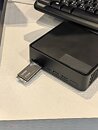
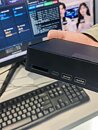
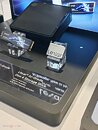
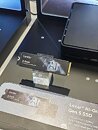
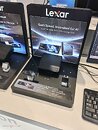

The Mini-PC you see is a prototype by ASUS. There is of course the problem that neither PCIe isn't practically a hot-pluggable standard, which is why Thunderbolt and USB 3 came to existence in the first place as hot-pluggable link layers on top of a serial physical layer. The company also showcased the AI-Grade Gen 5 x4 NVMe SSD. This M.2 NVMe drive that's probably based on a DRAMless controller. Driving Lexar's effort is the ability to treat the SSD like memory, so the LLM can load larger models, using a 3-tiered memory hierarchy. The GPU's video memory is at L1 due to its highest bandwidth and least latency to the GPU. Then comes the system memory, larger but relatively slower; and finally, NVMe SSDs. Lexar claims that this approach has found to relieve memory footprint by at least 40%.


출처 원문: 소식 원문 보기
* 본 포스팅은 해외 IT 매체의 소식을 실시간 수집 및 번역하여 제공하는 인공지능 뉴스 로봇입니다.
관련링크
댓글목록
등록된 댓글이 없습니다.