
‘Elite Cartel’ or ‘Inevitable Expertise’: The Current State and Future…
페이지 정보
작성자 playbbs 작성일 26-06-08 19:11 조회 596 댓글 0본문
‘Elite Cartel’ or ‘Inevitable Expertise’: The Current State and Future of the South Korean Military Organization
Date: June 08, 2026 | IT/Media Current Affairs Columnist
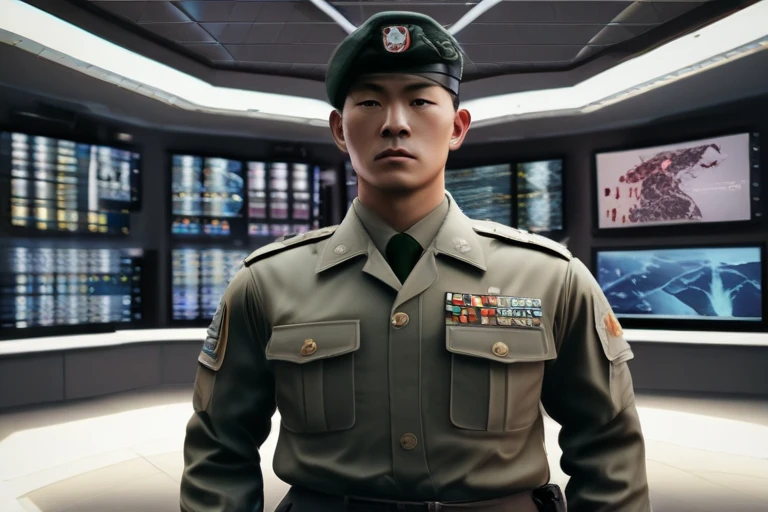
The invisible glass ceiling permeating the South Korean military organization is once again under scrutiny. The monopoly of key branch chief positions in the Navy, Air Force, and Marine Corps, revealed through recent parliamentary audit data, starkly illustrates how closed-off our military's personnel system has become under the guise of "meritocracy." While the military emphasizes expertise and leadership to justify its selection processes, social skepticism persists regarding whether a structure dominated by military academy graduates truly fosters a healthy organizational culture. Coupled with public interest in the Marine Corps, anecdotes of celebrity military service, and the strategic alignment between the U.S. and South Korean Marine Corps, these various discourses surrounding our military raise profound questions about the direction it should take.
According to data released by the National Assembly's National Defense Committee, an overwhelming majority of those who have served as key branch chiefs in the Navy, Air Force, and Marine Corps over the past decade are graduates of military academies. In the Navy, in particular, it is difficult to find individuals who are not academy graduates, excluding specialized branches such as medical or legal affairs, highlighting a severe concentration of specific backgrounds. Military authorities explain this phenomenon as the result of comprehensive considerations, including branch-specific expertise, leadership, and the ratio of long-term service members. However, some argue that this explanation is merely a logic used to justify the insularity of personnel management, raising concerns that such inequality of opportunity based on background could lead to low morale and hinder innovation within the military.
Despite the rigidity of this personnel structure, the South Korean Marine Corps has recently been making efforts to strengthen practical expertise through warrant officer candidate training. The 67th warrant officer candidate induction ceremony held at the Naval Education and Training Command focused on cultivating specialized personnel optimized for future battlefield environments, such as drone operations, going beyond simple military training. This demonstrates the military's will to foster "practical elite officers" equipped with actual combat power and technical operational capabilities in the field, independent of the academy-centered leadership structure. These attempts to diversify organizational expertise through policy changes and the strengthening of practical capabilities are considered essential processes to prevent the military organization from stagnating.
Meanwhile, the image of the military reflected in popular culture shows a different temperature from its strict reputation. The affection for the Marine Corps and service experiences shared by celebrities like rapper GREE or actor Park Ji-hoon are prime examples of how the military should communicate with the general public. In particular, the sight of these individuals, who were in unique environments as celebrities, maturing through military service and expressing a willingness to take on even tougher roles, plays a role in spreading a positive military service culture. Their stories of silently enduring harsh environments—where even family members could not visit—suggest the possibility that the military organization can transform beyond the perception of a closed elite group into an organization that breathes with the people.
Externally, the moves of the South Korean Marine Corps are highly strategic and dynamic. Marine Corps Commandant Joo Il-seok discussed future-oriented military cooperation plans, such as expanding joint ROK-U.S. exercises and reorganizing into a "quasi-fourth military branch" system, through high-level talks with the U.S. Marine Corps headquarters. This contains the strategic judgment of the military leadership to preemptively respond to changes in future operational environments, going beyond simply revisiting past battlefields to reflect on the meaning of the alliance. In particular, the revitalization of personnel exchanges between the ROK and U.S. Marine Corps is interpreted as part of an effort to align our military with international standards, enhance operational capabilities, and secure expertise.
Ultimately, the challenge facing the South Korean military lies in how to strike a balance between "background-centered elitism" and "practical-centered expertise." While the value of leadership possessed by military academy graduates cannot be denied, it must not become a barrier that blocks the organization's diversity and creativity. The military must continue to build a transparent personnel system to create an environment where non-academy officers can fully demonstrate their capabilities. Furthermore, by accelerating the cultivation of technical and tactical specialists prepared for future battlefields, it must establish a fair organizational culture where individuals are evaluated solely on their ability and dedication to the nation, regardless of their background.
■ Conclusion and Analytical Outlook
The South Korean military is currently at a critical crossroads between past customs and future challenges. The controversy over fairness in the appointment of branch chiefs is a task for maintaining healthy tension within the organization, while anecdotes of celebrity military service and progress in ROK-U.S. military cooperation reaffirm the social and strategic influence of our military. The military must now be reborn as an "open, professional organization" that can flexibly respond to the rapidly changing international situation and battlefield environment, rather than a group that simply maintains an elite cartel. A military that proves itself through ability alone, beyond background, and one that prepares for the future based on the trust of the people, is the true image of a strong military that South Korea should aspire to.
* This post is an analytical column automatically regenerated in the style of a current affairs commentator by analyzing real-time Google Trends popular search terms and related major articles.
댓글목록 0
등록된 댓글이 없습니다.