
The Stopped Clock and the Resuming Daily Life: A Chronicle of Humanity…
페이지 정보

본문
The Stopped Clock and the Resuming Flow of Daily Life: A Chronicle of Humanity Recorded by the Pandemic
Date: June 08, 2026 | Column by IT/Media Current Affairs Critic
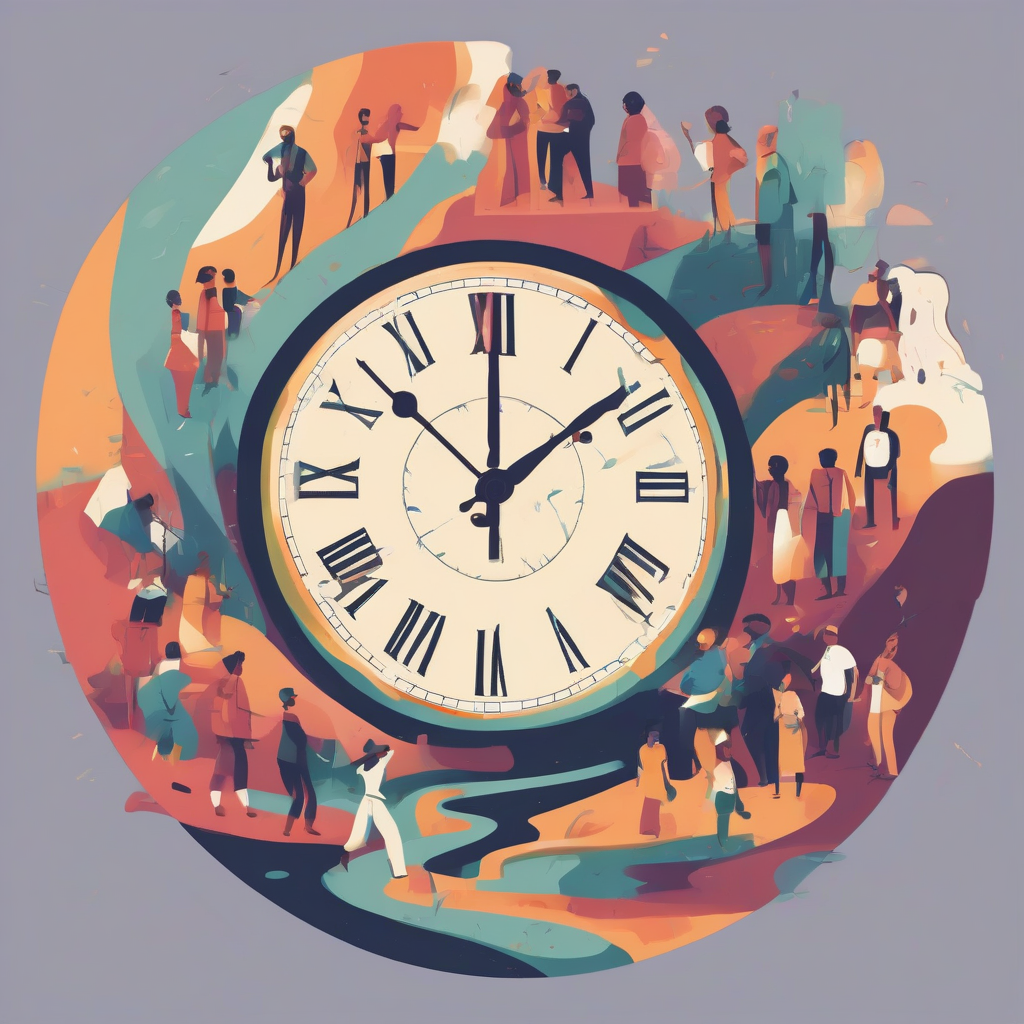
The history of humanity is sometimes forcibly altered by events akin to massive tidal waves. The COVID-19 pandemic, which dominated our lives for the past few years, went beyond a mere health crisis; it presented unprecedented challenges of our era, including cross-border political conflicts, economic uncertainty, and the fragmentation of daily life. Countless news photos and reports from across the globe were recorded like the desperate struggle of humanity trying to turn the hands of a stopped clock. Now, through these fragmented records, we intend to take an in-depth look at the lessons the pandemic era left behind and the trajectory of life that persisted tenaciously throughout it.
In the early stages of the pandemic, the world was blocked by a massive barrier known as "lockdown." Governments worldwide struggled to prevent the spread of the virus by taking extreme measures, halting economic activity and restricting movement. Schools and businesses closed their doors, streets fell into silence, and airports that were once bustling with travelers turned into ghost towns. Yet, amidst this stillness, social inequality and economic blows became even more apparent. Protests by workers who lost their jobs erupted across the globe, and the conflict between governments trying to resume minimal economic activity for survival and citizens concerned about the risks pushed social tension to its peak.
The health crisis also metastasized into a political one. Governments faced internal criticism regarding the efficiency of their quarantine policies, which sometimes manifested as large-scale anti-government protests or policy confusion. The political upheaval in Hong Kong, the military coup in Myanmar and the subsequent pro-democracy movement, and the Black Lives Matter (BLM) movement against racial discrimination—all show the dynamism of humanity that did not stop even amidst the chaos of the pandemic. In particular, while the international community shared the common task of disease control, it created complex diplomatic dynamics as each nation calculated its own interests regarding vaccine supply and border reopening.
The collapse of daily life also completely changed the landscape of culture and art. The art world, where in-person events were completely canceled, struggled to find new breakthroughs through non-face-to-face exhibitions or online performances, while the sports world fought to maintain the continuity of competitions by holding matches without spectators. Nevertheless, the human artistic instinct did not disappear. Film festivals and exhibitions resumed, albeit in a limited capacity under strict quarantine rules, and people continued to communicate in various ways to bridge the emotional distance while maintaining physical distance. This can be seen as an expression of the persistent will of humans to protect their mental health through cultural solidarity even in an isolated environment.
As time passed, with the distribution of vaccines, society gradually entered a new phase of "living with COVID." Nations eased strict quarantine guidelines and made efforts to make the heart of the economy beat again. However, the process was not smooth. Controversies surrounding vaccinations, the emergence of variant viruses, and the fear of resurgence kept humanity from letting its guard down. In particular, issues such as the state of education and the livelihoods of small business owners remained unresolved, and the collapse of international supply chains and rising inflation clearly demonstrated how deep and widespread the economic aftereffects of the pandemic are.
Now, we must review how humanity has responded to and adapted to crises through these past records. Amidst growing warnings about climate change and incessant regional conflicts, the pandemic taught us how fragile, yet essential, "global solidarity" is. The fragmented events in the news are not merely records of the past, but signposts for how we should overcome the greater crises we may face in the future. From government policy decisions to the small daily lives of citizens, all these records are fragments of a great lesson that reminds us once again that we are all in the same boat.
■ Conclusion and Outlook
The pandemic was a massive ordeal for humanity, but it was also a mirror that forced us to face the true face of our society. Even amidst the chaos and pain, we learned how to empathize with each other's suffering and stand in solidarity, and we built a new order to restore our stopped daily lives. Now, standing on the foundation of the records from the past few years, we are at a point where we must design a more robust and inclusive future. The message conveyed by the news of the past is clear: life must go on regardless of any crisis, and what sustains that life is ultimately the trust and solidarity between people.
* This post is an analytical column automatically regenerated in the style of a current affairs critic by analyzing real-time Google Trends popular search terms and related major articles.
- 이전글지연된 기대, 그리고 게임 산업의 거대한 변곡점: GTA 6가 던진 파장 26.06.08
- 다음글이재명의 ‘공공기관 대이동’ 구상과 공기업 경영의 새로운 지평 26.06.08
댓글목록
등록된 댓글이 없습니다.