
The 'Dark Temptation' of the Capital Market and the President's Warnin…
페이지 정보
작성자 playbbs 작성일 26-06-09 05:46 조회 584 댓글 0본문
The 'Dark Temptation' of Capital Markets and the President's Warning: Dissecting the New Face of Stock Price Manipulation
Date: June 09, 2026 | Column by IT/Media Current Affairs Critic
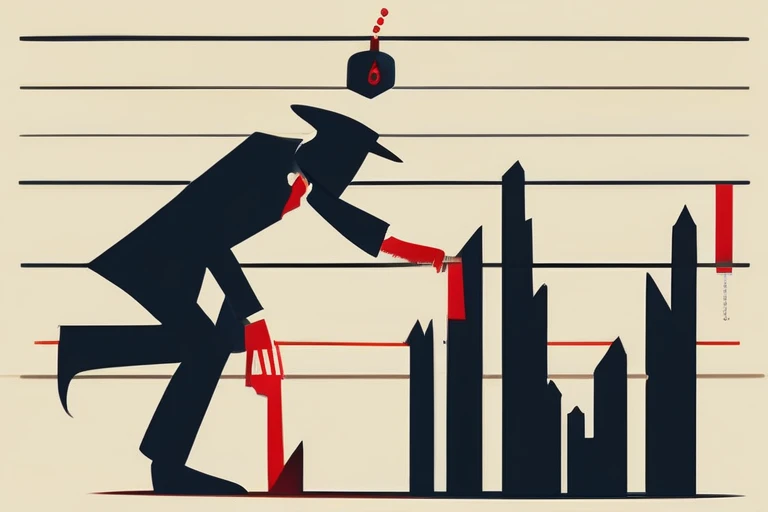
The stock market is often called the heart of the economy, but behind the scenes, subtle strategies lurk, designed to blind investors and secure private gains. Recently, President Lee Jae-myung publicly targeted allegations of "stock price suppression" by a specific company, causing a major stir in the capital markets. Beyond mere market volatility, the practice of companies abusing Exchangeable Bonds (EB)—a capital-raising tool—to artificially suppress stock prices and increase the stakes of owner families is a serious issue that shakes the foundations of capitalism. This incident goes beyond the misconduct of a single company; it clearly illustrates the structural reasons why our stock market has been unable to shed the "Korea Discount" stigma.
Intops, a KOSDAQ-listed company at the center of the controversy, inserted highly abnormal call option clauses during its issuance of exchangeable bonds. While a typical company would welcome a rise in its stock price, Intops set a right for the company to forcibly redeem the bonds if the stock price rose above a certain level. This prevented investors from expecting any stock price appreciation and, conversely, led to short selling as a means to hedge profits. The fact that the stock was designated as an "overheated short-selling" item multiple times following the bond issuance proves that these structural loopholes led to market disruption.
Even more shocking is the evidence that the second-generation owner strengthened their control over the governance structure during this period of stock price suppression. The act of the owner family using family-owned companies to accumulate shares while the stock price was artificially suppressed is suspected to be a typical tactic to infringe upon the interests of general shareholders and facilitate an illicit succession of management rights. In a situation where the government is strongly demanding the enhancement of shareholder value, such as through treasury stock cancellation for corporate value-up, this case—which took the exact opposite path—has pushed the government's patience regarding capital market fairness to its limit.
Following the President's strong rebuke, financial authorities have immediately launched a thorough investigation. The Financial Services Commission (FSC), the Financial Supervisory Service (FSS), and the Korea Exchange (KRX) are closely examining whether Intops' public disclosures provided sufficient risk information to investors and whether actual market manipulation occurred after the bond issuance. This inspection is more than just a simple investigation; it is a strong warning to companies that abuse loopholes in the disclosure system. Moving forward, authorities are expected to focus on securing capital market transparency by establishing new disclosure standards and supplementary measures to fundamentally block stock price suppression.
The situation across the entire market is also difficult. With short-selling balances for large-cap stocks like Hanmi Semiconductor and Samsung Electronics soaring to record highs, market volatility has expanded to an extreme degree. Coupled with instability in the Middle East, a sharp rise in U.S. Treasury yields, and short squeeze events in the cryptocurrency market, the global financial environment is gripped by a fear reminiscent of "Black Monday." The Korea Exchange has entered emergency response mode, triggering sidecars to stabilize the market and strengthening constant surveillance systems against illegal short selling.
Ultimately, this situation points to the direction of reform that our capital markets must take. The "Anti-Stock Price Suppression Act" emphasized by President Lee Jae-myung is not merely about increasing legal regulations, but an attempt to resolve the contradiction in the current tax structure where lower stock prices lead to lower inheritance tax burdens. The core of this reform is to break the structure where companies with low PBRs are reluctant to boost stock prices, and instead induce a situation where enhancing corporate value is directly linked to the interests of major shareholders. For the domestic stock market, including the KOSDAQ, to achieve a true value-up, institutional determination to root out these unfair practices is essential.
■ Conclusion and Outlook
In the end, trust in the stock market comes from fair rules. As long as companies abandon their primary purpose of capital raising and pursue private gains for owners through expedient methods, the undervaluation of the Korean stock market can never be resolved. The government's firm response is instilling a healthy sense of tension in the market, which is an essential process for long-term investor protection and market revitalization. Now is the time for companies to read the demands of the era and fulfill their inherent duties of transparent management and enhancement of shareholder value. We hope that the government's will for a fair capital market will lead to substantive institutional changes, building a healthy economic ecosystem where investors can safely commit their capital.
* This post is an analytical column automatically regenerated in the style of a current affairs critic by analyzing real-time Google Trends popular search terms and related major articles.
댓글목록 0
등록된 댓글이 없습니다.