
A Shift in the Import Car Market: The Collapse of Japanese Automakers'…
페이지 정보

본문
A Shift in the Import Car Market: The Collapse of Japanese Brands Under the 'EV Offensive'
Date: June 09, 2026 | Column by IT/Media Current Affairs Critic
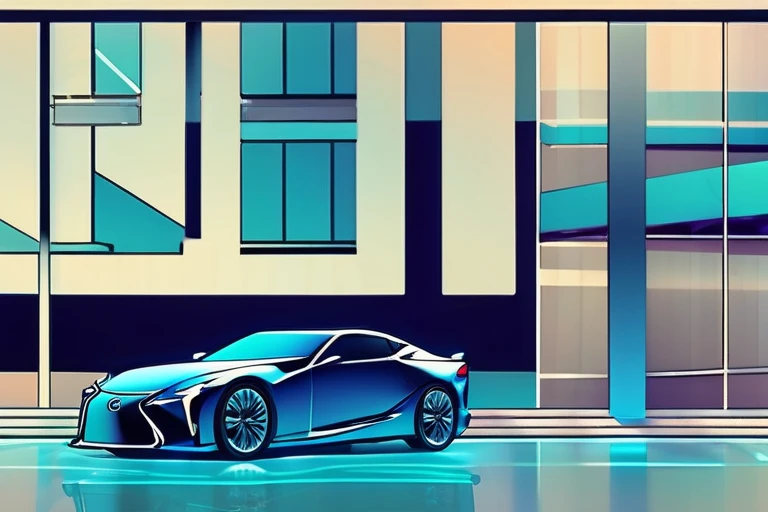
Just a few years ago, Japanese brands were symbols of solid reliability and premium quality in the South Korean import car market. However, the winds of change sweeping through the automotive industry have completely shaken up the existing hierarchy. In particular, the phenomenon of Chinese electric vehicle (EV) manufacturers encroaching on the market share of Japanese cars, driven by price competitiveness and unconventional product appeal, suggests that the market paradigm is shifting beyond mere changes in sales volume. Consumers are now pursuing the practical value of "future mobility" rather than brand tradition, and this massive wave is completely reshaping the landscape of the import car market.
Recent statistics from the Korea Automobile Importers & Distributors Association (KAIDA) have sent shockwaves through the industry. Last April, the number of new registrations for Chinese-made vehicles surpassed that of Japanese cars for the first time in history, climbing to third place in sales by country. The performance of the BYD brand, in particular, was unparalleled. The fact that the sales performance of BYD alone exceeded the combined sales of the three major Japanese automakers—Lexus, Toyota, and Honda—proves that the market's center of gravity has already tilted toward China. This result is not a temporary trend for a specific model, but a clear indication that Chinese EV brands have successfully established themselves in the Korean market.
Behind the rapid rise of Chinese cars lies a thoroughly calculated strategy of pricing and product enhancement. By maintaining a reasonable price range from 20 million to 40 million won while offering a wide lineup covering SUVs, sedans, and hatchbacks, they have expanded the range of choices for consumers. In particular, flagship models like the "Sealion 7" have proven their competitiveness by recording registration figures comparable to Mercedes-Benz's representative volume model, the E-Class. The preconceived notion that Chinese cars were "low-end" has rapidly shifted toward recognizing their high cost-effectiveness and technological prowess.
The decline of Japanese brands is being pointed out as more than just a drop in sales; it is a failure of future strategy. As the internal combustion engine technology of domestic manufacturers like Hyundai and Kia has reached a world-class level, the differentiation in quality reliability that only Japanese cars once possessed has been diluted. A bigger problem is the speed of the transition to electrification and Software-Defined Vehicles (SDV). Unable to secure technological leadership in the rapidly changing future mobility environment, Japanese brands are failing to present attractive alternatives to consumers. With most Japanese brands other than Lexus and Toyota having withdrawn from the Korean market, Chinese companies are quickly filling the void.
As the market shift accelerates, Japanese brands are struggling to prevent customer churn. The recent business agreement between Toyota Korea and the Korea Insurance Development Institute can be interpreted as a manifestation of this sense of crisis. The move is intended to resolve the inconvenience for consumers who, despite driving vehicles equipped with advanced safety features, found it difficult to receive insurance discounts due to complex verification procedures. By directly linking vehicle data with insurance companies to simplify the discount process, they are implementing practical measures to increase existing customer satisfaction and improve the user experience as a premium brand. This can be seen as part of strengthening service competitiveness to maintain brand loyalty.
Meanwhile, the offensive from Chinese car manufacturers is expected to intensify further. The fact that "Zeekr," a premium brand under the Geely Auto Group, has begun its full-scale entry into Korea by opening a large-scale showroom in the heart of Gangnam signifies that the Chinese push into the Korean market is only in its initial stages. For Chinese EV companies whose domestic market is already saturated, Korea is an attractive testbed and a new source of revenue. If Chinese brands that are ahead in autonomous driving and SDV technology enter the domestic market in greater numbers, the market share composition of imported cars by country is highly likely to fluctuate even more.
■ Conclusion and Analytical Outlook
In conclusion, the Korean import car market has transformed into a fierce battlefield between "traditional powerhouses" and "emerging challengers." Amid the massive trend of electric vehicles, Chinese brands have quickly solidified their position by balancing price and technology, while Japanese brands are countering with defensive strategies focused on service enhancement and customer convenience. The important point is that consumers are no longer bound by nationality or brand reputation, but are choosing vehicles that provide the technology and value they need. The future landscape of the import car market will be determined not by the past glory of brands, but by the results of the innovation race toward future mobility.
* This post is an analytical column automatically regenerated in the style of a current affairs critic by analyzing real-time Google Trends popular search terms and related major articles.
- 이전글다시 광장에 울려 퍼질 함성, 2026 북중미 월드컵 거리응원의 귀환 26.06.09
- 다음글광화문의 붉은 함성, 2026 북중미 월드컵을 향한 다시 뜨거운 질주 26.06.08
댓글목록
등록된 댓글이 없습니다.