
Warm winds from the Middle East and domestic price defenses: economic …
페이지 정보
작성자 playbbs 작성일 26-06-24 17:29 조회 1,515 댓글 0본문
Warm winds from the Middle East and domestic price defenses: The economic shock that oil sanctions relief will bring
Written on: June 24, 2026 | Column by current affairs critic specializing in IT/media
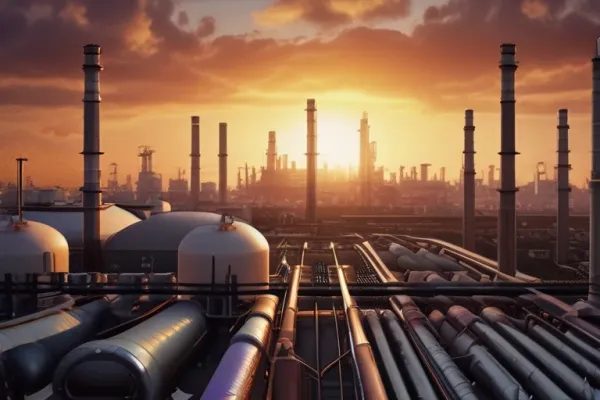
The recent peace talks between the United States and Iran, which have attracted the attention of the international community, go beyond the political significance of simply ending the war in the Middle East and are becoming a huge turning point that is shaking up the landscape of the global energy market. As Iran's oil export route, which had been frozen for a long time, shows signs of opening, there are mixed expectations and concerns about whether the global economy, which has been suffering from high inflation, will be able to stabilize once again. However, there are still many obstacles to overcome before the macroscopic changes resulting from the lifting of sanctions are actually reflected in our table prices and gas prices at gas stations. Today, we would like to closely analyze the changes in the energy supply chain brought about by the improvement in US-Iran relations and the domestic economy's response strategies accordingly.
As the United States and Iran enter a new phase of 60-day oil export sanctions suspension and peace talks, the energy market is finding order amid chaos. Iran has moved away from the indirect export method of exporting through shadow fleets and has now begun to aggressively develop sales channels targeting Asian countries, aiming to enter the normal global market, including dollar payments. However, the market's reaction is colder than expected because Asian oil refineries, which have already secured sufficient inventory in preparation for the tense situation in the Strait of Hormuz, have no reason to rush to purchase Iranian crude oil, which is subject to great uncertainty. Moreover, the geopolitical risk that U.S. policy may change suddenly again and the complex financial and insurance procedures that come with importing Iranian crude oil still act as high entry barriers for buyers.
In the domestic economy, efforts to manage prices are deepening, reflecting the volatility of international oil prices. President Lee Jae-myung proposed a realistic plan to maintain the maximum oil price system for the time being and gradually lower it according to the situation. This was a measure to guard against the possibility that the decline in oil refinery supply prices may not be immediately passed on to consumers despite the international oil price trend. The government intends to use the expected excess tax revenue from the semiconductor sector to support the consumption power of ordinary people, and has presented a roadmap to substantially reduce the burden of oil prices by expanding the scope of fuel tax cuts starting in August. This can be said to be a result of the government's strong will to bring down energy costs, which had soared in the aftermath of the war, to a manageable level.
Meanwhile, the Ulsan region, the center of the petrochemical industry, is struggling for survival amidst the double whammy of sluggish business conditions and employment instability. As the recession in the petrochemical industry continues, Ulsan City is pursuing a plan to extend the designation period for Nam-gu as an employment crisis preemptive response area by six months. This is intended to continue to attract government support to prevent the core foundation of the local economy from collapsing. Even in this crisis situation, major companies such as Kumho Petrochemical are risking their lives to strengthen ESG management and secure future competitiveness. In particular, they are specifying a carbon neutral roadmap through sustainability reports, accelerating the development of eco-friendly materials, and showing moves to overcome the industry crisis through technological innovation.
Management rights issues within the company are also a noteworthy point to watch. The sight of Kumho Petrochemical's Vice President Park Joo-hyung consolidating his control by steadily purchasing treasury stocks in a situation where the embers of the management rights dispute have not been completely extinguished is giving rise to various interpretations in the market. This may be seen as a simple part of responsible management, but it also suggests that the possibility of competition for shares with former Managing Director Park Cheol-wan, who still exerts influence as the largest individual shareholder, cannot be completely ruled out. Meanwhile, the government is implementing an all-round price stabilization policy, including significantly expanding imports to control shopping basket prices, such as egg prices, which are directly related to the lives of ordinary people. The current economic situation, in which external energy variables from the US and Iran and employment and management rights issues in domestic industries are complexly intertwined, requires advanced political judgment and strategic response from both the government and companies.
■ Conclusion and analysis outlook
In the end, whether the gap in the energy market opened by the negotiations between the United States and Iran will be a boon for our economy or just a temporary breeze will depend on the government's detailed price management and the industry's efforts to improve the structure of the industry. External geopolitical variables are beyond our control, but minimizing their impact and protecting the domestic economy is entirely within the realm of policy. It is a time when we desperately need a balanced perspective that closely monitors the flow of international oil prices, operates the maximum oil price system and fuel tax policy flexibly, and seeks to stabilize employment in the petrochemical industry, which is in crisis. In times of high economic uncertainty, transparent management and responsible policy implementation will be the only key to gaining market trust.
* This post is a commentary by PlayBBS that analyzed real-time Google Trends popular search terms and related major articles.
댓글목록 0
등록된 댓글이 없습니다.