
The screams of the stock market at a standstill, the true face of the …
페이지 정보
작성자 playbbs 작성일 26-06-23 12:46 조회 941 댓글 0본문
The screams of the stock market at a standstill, the true face of the Korean capital market revealed by the ‘selling sidecar’
Written on: June 23, 2026 | Column by current affairs critic specializing in IT/media
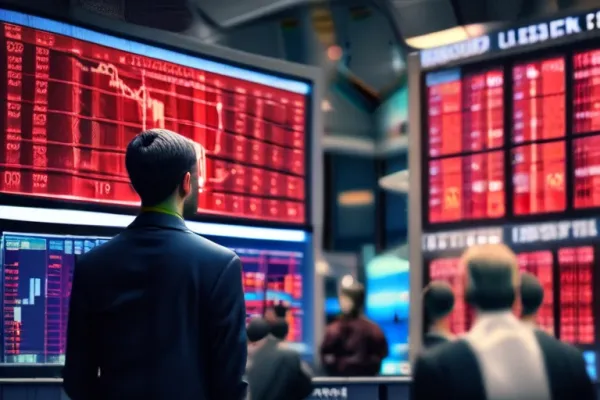
What broke the peaceful morning of investors was none other than the exchange’s cold ‘pause’ signal. On the morning of the 23rd, the domestic stock market, which was racing like a train with broken brakes, faced an emergency braking device called sidecar selling simultaneously in the two major markets, KOSDAQ and KOSPI. This incident, which quickly cooled the overall market as investor anxiety led to a selloff, was an incident that clearly showed the structural vulnerability of our stock market beyond the simple fact that the index fell. Let's look at what drove our market into such extreme volatility, the urgent trend in the financial sector hidden behind it, and the essential problems of the market.
The trigger for this sharp drop was the intense intraday selling by foreign and institutional investors. The fact that sidecars were launched in succession, starting from the KOSDAQ at 11:37 am and extending to the KOSPI market just 3 minutes later at 40 minutes, proves how quickly the market's fear mentality has spread. The situation in which the KOSPI 200 futures index plunged by more than 5% and the KOSDAQ 150 futures by more than 6%, and the program selling price was halted, is an unusual phenomenon that has been repeated in just 11 trading days since the 8th. In particular, in the stock market, the 27th sidecar has already been activated this year alone, which already exceeds the annual record during the financial crisis, suggesting that volatility in the domestic market has passed a critical point.
The fundamental cause of this slump is the extreme focus on leading semiconductor stocks. As supply and demand were excessively concentrated in stocks with high market capitalization, such as Samsung Electronics and SK Hynix, small fluctuations in these stocks caused a domino effect that dragged down the entire index. The securities market interprets this as a side effect of technical supply and demand imbalance rather than a collapse of fundamentals. Han Ji-young, a researcher at Kiwoom Securities, also analyzed that the reason the market collapsed despite stable macroeconomic indicators was because the supply and demand structure, which was overly dependent on certain sectors, could not withstand the wave of profit-taking sales.
Meanwhile, external negative news also contributed to dampening investment sentiment. In addition to doubts about the cost of investing in artificial intelligence (AI) infrastructure, which caused the decline of the US Nasdaq, the possibility of an interest rate hike by the Federal Reserve was mentioned again, stimulating investor anxiety. In addition, complex external variables, such as the decline in oil prices due to the previous negotiations with Iran, were mixed, making the direction of the market more uncertain. Amid this chaos, management companies are busy seeking self-help measures to mitigate the market shock, such as launching new ETF products that combine dividend avoidance strategies and covered calls to protect against volatility.
As the market continued to plunge, the defensive buying trend of individual investors stood out, but it was not enough to receive trillions of won worth of items pouring in from foreigners and institutions. Even during afternoon trading, the stock prices of major semiconductor companies plummeted by 5-8%, and the downward pressure on the market seems to be not going away. Rather than concluding that the current situation is a harbinger of a stock market peak or bubble bursting, experts view it as a transitional phenomenon that appears in the process of controlling the pace of the market. As a result, the activation of this sidecar is a warning again of how dangerous the ‘aesthetics of concentration’ in our stock market can be.
■ Conclusion and analysis outlook
The activation of the sidecar on the 23rd is a painful lesson that shows that the Korean stock market is no longer dependent only on external variables, but urgently needs to improve its internal supply and demand structure. It is not possible to overcome repeated volatility markets simply by preventing selloffs through emergency devices. Rather than simply accepting the current plunge with fear, investors should use it as an opportunity to reexamine portfolios that are excessively invested in specific stocks. The market wave will eventually subside, but in order to survive, a cool-headed investment perspective and a diversified strategy that do not get caught up in the rush are more important than ever.
* This post is a commentary by PlayBBS that analyzed real-time Google Trends popular search terms and related major articles.
- 이전글 A ball launched by a bucket of side dishes, what is the standard of ‘fairness’?
- 다음글 Red passion heats up Santa Clara: Jordan vs. Algeria record at the 2026 World Cup
댓글목록 0
등록된 댓글이 없습니다.