
Jensen Huang’s Choice: The Medical Revolution in the Era of ‘Sovereign…
페이지 정보
작성자 playbbs 작성일 26-06-09 16:36 조회 442 댓글 0본문
Jensen Huang’s Choice: The Medical Revolution in the Era of ‘Sovereign AI’ Led by Lunit
Date: June 09, 2026 | Column by IT/Media Current Affairs Critic
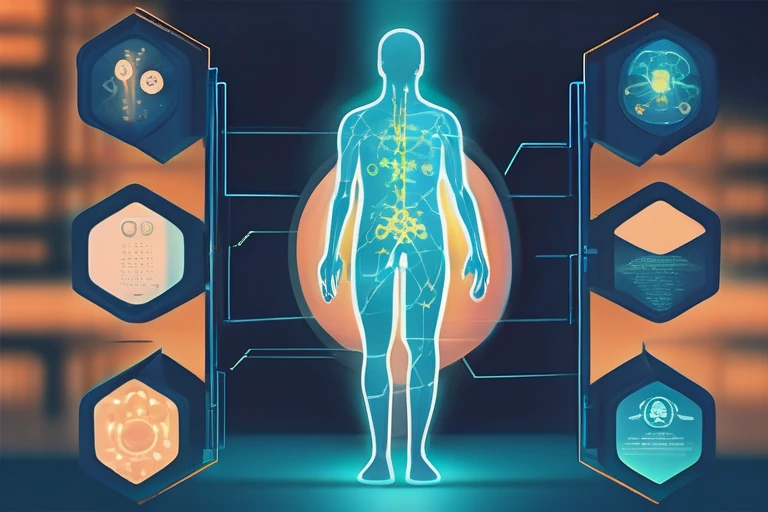
When Jensen Huang, the head of NVIDIA and a leader driving the global AI industry, visited Seoul, the industry's eyes naturally turned to the "South Korean partners" he chose. The fact that Lunit, a representative player in medical AI, was invited to this prestigious gathering is more than just a simple event; it is proof of how solid Lunit's status has become within the global AI ecosystem. Having moved beyond the stage of merely possessing a technological edge, the company now stands at the center of a grand discourse on building national-level infrastructure. This meeting appears to be a critical inflection point where Lunit’s unparalleled data and technical prowess leap toward becoming a global standard. What we must pay attention to is how the future of medical AI presented by Lunit will combine with customized national infrastructure to redesign human health.
The core agenda of this meeting, "Sovereign AI," refers to a strategy where each nation controls its own infrastructure and data to build an independent AI ecosystem. This concept, which CEO Jensen Huang is strongly promoting worldwide, holds particular significance in the medical field. Because medical data varies by country due to ethnic characteristics and environmental factors, a model that perfectly understands local nuances is essential rather than a general-purpose AI model. Lunit leverages its experience in operating national-level cancer screening programs at this juncture. Its real-world data, successfully gathered from public medical projects in over 10 countries, is a key asset proving that Lunit is the most powerful partner in the era of Sovereign AI.
Lunit’s "L1," a foundation model specialized for medical science highlighted at the event, is evaluated as having achieved both technical efficiency and practicality. L1 is optimized for clinical reasoning and decision support, adopting an efficient structure that delivers high performance without requiring massive computational resources. This means the company is not just obsessed with performance competition, but is aiming for "field-ready AI" that can be immediately utilized in actual medical settings. Achieving excellent results in rigorous global evaluation standards, such as OpenAI’s Health Bench, proves that this technology has already secured international-level reliability. Now, Lunit’s model is establishing itself as core infrastructure leading the digital transformation of entire hospitals, moving beyond a simple diagnostic aid tool.
Lunit’s growth is not limited to independent technological development but is being accelerated through a powerful consortium ecosystem. Currently collaborating with 23 institutions across industry, academia, research, and hospitals to carry out government projects, Lunit is pursuing an open model to broaden the base of medical AI. In particular, it has recently been exploring the practical application of its foundation model in partnership with major medical institutions such as the National Health Insurance Service Ilsan Hospital and Severance Hospital. This collaborative model maximizes the utility of Lunit’s foundation model, laying the groundwork to innovate the entire workflow of medical staff, from analyzing papers to writing medical reports. This is becoming a practical breakthrough for solving chronic issues in the medical field, such as staffing shortages and excessive workloads.
Lunit’s global strategy has been further solidified through its expansion into the U.S. market. In particular, the acquisition of Volpara served as a catalyst for securing a high penetration rate of approximately 23% in the U.S. breast cancer screening market, which became a decisive move for Lunit to dominate global infrastructure. By providing infrastructure that automates and connects the entire screening journey rather than just selling diagnostic solutions, Lunit is positioning itself as a "problem solver" that addresses the structural challenges of the U.S. healthcare system. This market dominance is another reason why global giants like NVIDIA cannot help but pay attention to Lunit. Lunit is now evolving from a solution provider into an architect of global medical AI infrastructure.
It is highly significant that Lunit, which was selected as one of the world’s top 5 AI startups in NVIDIA’s startup acceleration program "Inception Awards" back in 2017, has now grown into a leader discussing ecosystem building on equal footing with NVIDIA. As Chief Technology Officer (CTO) Sung-won Yoo emphasized at the meeting, every country is craving reliable AI that reflects the data of its own citizens. Lunit is providing a technical solution that precisely addresses this demand. The experience and technology possessed by Lunit will serve as a powerful link to bind fragmented medical data together. The collaboration with NVIDIA is likely to be more than just a business meeting; it is the starting point of a grand journey to establish global medical AI standards.
■ Conclusion and Outlook
In conclusion, this NVIDIA meeting was a stage declaring that Lunit has firmly established itself as a key player defining the standards of global medical AI beyond South Korea. Within the new paradigm of Sovereign AI, Lunit’s foundation model and field operation experience hold irreplaceable value. Lunit’s trajectory, equipped with the trio of technological advancement, market penetration, and strategic partnerships, makes us look forward to how it will change the future of human healthcare. Lunit is no longer just a company that makes AI, but a protagonist of infrastructure that is changing the foundation of the global medical system, preparing for the next stage of innovation. Jensen Huang’s choice was by no means a coincidence, and the future of medical AI that Lunit will show is now officially on track.
* This post is an analytical column automatically regenerated in the style of a current affairs critic by analyzing real-time Google Trends popular search terms and related major articles.
댓글목록 0
등록된 댓글이 없습니다.