
The return of ‘quiet supersonic speed’, solving the homework left behi…
페이지 정보

본문
The return of ‘quiet supersonic’, solving the homework left behind by Concorde
Written on: June 13, 2026 | Column by current affairs critic specializing in IT/media
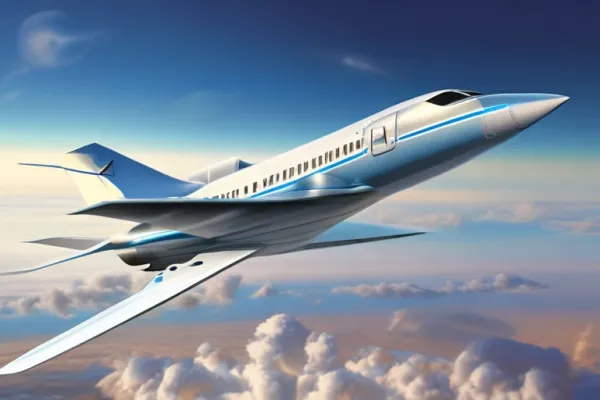
The era of supersonic passenger planes that cross the Atlantic Ocean in just 4 hours from London to New York in the blink of an eye is upon us once again. The shadow of ‘Concord’, which disappeared into history in 2003 with the label of massive binge drinking and economic inefficiency, is finally being lifted. This is because the experimental aircraft ‘X-59’, developed by the National Aeronautics and Space Administration (NASA) in partnership with Lockheed Martin, recently succeeded in a test to break the speed of sound, proving the feasibility of humanity’s long-held dream of ‘quiet supersonic flight.’ This is expected to be a huge turning point that goes beyond simple technological progress and will completely change the paradigm of aviation regulation and mobility that has been tied up for decades.
The core of the X-59 project is to completely technically control the ‘sonic boom’, which was the biggest obstacle to supersonic flight. In the past, supersonic aircraft sent huge shock waves to the ground the moment they exceeded the speed of sound, breaking the peace of populated areas, but the X-59 overcame this through its unique airframe design. The needle-like nose, which is long enough to occupy one-third of the entire fuselage length, minimizes air resistance and plays a role in naturally dispersing shock waves. Thanks to this, the noise felt on the ground is suppressed to a level of 75 decibels, equivalent to lightly closing a car door from 6 meters away, rather than a roar. This can be considered a sophisticated victory that demonstrates how aeronautical engineering can overcome physical limitations through creative design.
In addition to solving technical challenges, innovation in flight systems is also something to keep an eye on. The X-59's cockpit boldly removed the front windshield and introduced the ‘External Vision System (XVS)’, which combines a high-resolution camera and 4K display. Digital technology perfectly compensated for the problem of forward visibility, which was difficult to obtain due to the bizarrely long shape of the nose. This design ensures pilot safety while maximizing the streamlined shape of the aircraft, resulting in maximum supersonic flight efficiency. In addition, this test flight is the result of data accumulated through 16 phased flight tests over the past 90 days, and is interpreted as a very real progress toward commercialization in that a stable flight rhythm has been secured.
NASA's success in this test is expected to go beyond a simple experiment and become the basis for redefining international aviation regulatory standards in the future. The United States has had a strict ban on supersonic flights over land since 1973, but the data collected by the X-59 could be key to breaking down this outdated regulatory wall. NASA plans to conduct in-depth research in the future to measure noise levels above actual residential areas through mission conditions above Mach 1.4 and investigate residents' reactions based on this. Based on this data, the U.S. Federal Aviation Administration (FAA) and the International Civil Aviation Organization (ICAO) plan to establish new noise certification standards. This scientific standardization work will provide a legal and technical foundation for the global civil aviation industry to once again enter the supersonic passenger aircraft market.
Of course, the future of supersonic commercialization is not all rosy. Some are raising environmental concerns that supersonic aircraft emit significantly more greenhouse gases than regular aircraft, and how to make the enormous development and operating costs economically feasible is also a problem that must be resolved. Nevertheless, the fact that private startups such as ‘Boom Supersonic’ have entered the competition by developing next-generation supersonic aircraft proves that the potential of this market is just as huge. Ultimately, the process of finding a balance between technological progress and environmental sustainability will be a key variable in determining the future era of supersonic aviation. The X-59 became a milestone at the start of a seemingly impossible race.
■ Conclusion and analysis outlook
The success of the X-59 is a monumental event that rewrites a page in aviation history. The stigma of ‘noise’ left behind by Concorde is now being cured with a new name, ‘quiet technology’. Although there is still a long journey of technology verification and deregulation ahead of full-scale commercialization, the current achievement of crossing the sound barrier and realizing silent flight proves that humanity has advanced one step further in its ability to overcome the constraints of time and space. In the not-too-distant future, we may be able to enjoy the daily routine of leaving New York in the morning and eating lunch in London. This is why X-59's next move, which will shake up the skyway paradigm, is attracting attention from around the world.
* This post is an analysis column that is automatically recreated in the style of a current affairs critic's commentary by analyzing real-time Google Trends popular search terms and related major articles.
- 이전글KIA를 떠나 빅리그의 중심에 서다: 에릭 라우어의 드라마틱한 반전 서사 26.06.13
- 다음글K-팝, 2026 북중미 월드컵을 점령하다: 리사의 퍼포먼스와 무대를 잇는 한국의 존재감 26.06.13
댓글목록
등록된 댓글이 없습니다.