
‘Memory uprising’ threatens NVIDIA’s dominance, SanDisk opens a new AI…
페이지 정보

본문
‘Memory revolt’ threatens Nvidia’s dominance, SanDisk opens a new AI era
Written on: June 13, 2026 | Column by current affairs critic specializing in IT/media
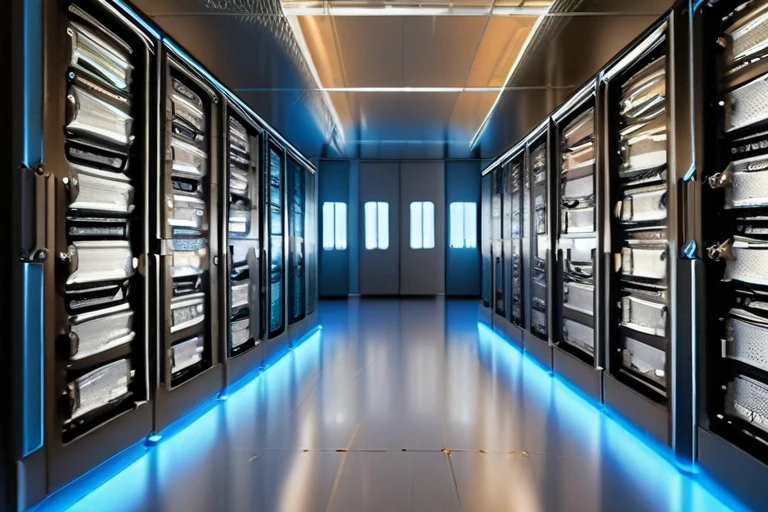
During the last few years of the artificial intelligence (AI) craze, the market's attention was focused solely on the giant sun called NVIDIA, which produces graphics processing units (GPUs). However, if we look closely at Wall Street's recent capital flows and investment strategies, we can sense that the center of light is slowly shifting to the actual ‘data warehouse’ called memory semiconductors. In particular, the phenomenal stock price rise shown by memory specialist companies, led by SanDisk, goes beyond a simple thematic surge, sending a clear signal that AI infrastructure is being reorganized around ‘storage and bandwidth’, the foundation of hardware. We would like to shed light on whether SanDisk can truly become the next-generation AI superstar succeeding Nvidia, and shed light on its potential from various angles through market data and expert analysis.
The reason why SanDisk has gained particularly strong momentum despite the recent volatility in the overall semiconductor industry is due to structural changes in the supply chain, such as SK Hynix's announcement of a large-scale expansion. The long-term production capacity expansion plan until 2034 presented by SK Group Chairman Chey Tae-won went beyond the vision of one company and reaffirmed the market's perception that the supply of memory semiconductors is essential to process the massive data required by AI. Thanks to these macroeconomic factors, related stocks such as SanDisk, Western Digital, and Micron rose simultaneously, injecting positive energy into the overall sector. Wall Street experts evaluate this as the beginning of a ‘super cycle’ in which AI-led memory demand overwhelms supply capacity, and emphasize that attention should be paid to improving the fundamental structure of the industry rather than short-term stock price fluctuations.
Wall Street financial companies' trust in SanDisk is proven by specific figures such as an increase in the target stock price. Major securities firms, including Cantor Fitzgerald, Mizuho Securities, and Bank of America, are maintaining a strong buy opinion on SanDisk, predicting that it will soon break the $2,000 mark. In particular, the prevailing analysis is that the rapid rise shown by SanDisk over the past month and its resilience despite the adjustment period are the result of strong buying power from institutional investors. The case of SanDisk, which recorded a phenomenal return of more than 4,000% in just one year, has become a clear indicator to investors where the 'core of AI infrastructure' lies. This optimism is not simply based on past performance, but on the belief that the explosive growth of the AI inference market in the future will be directly linked to rising memory prices.
Changes in investment strategies of global asset managers also prove SanDisk’s status. The fact that Hanwha Asset Management’s ‘PLUS Global HBM Semiconductor’ ETF has reorganized its portfolio by newly including SanDisk means that memory semiconductors are now being re-evaluated as structural growth stocks that drive AI growth, breaking away from the old frame of being economically sensitive stocks. Experts agree that the role of NAND flash and DRAM in storing and quickly loading data will become more important as AI data centers expand. In fact, companies like Micron and SanDisk at the forefront of AI inference are enjoying more than double-digit price increases every quarter, which in turn is leading to improved profitability. This phenomenon of funds being concentrated in memory companies that are the first to absorb demand from downstream industries is a key variable in predicting where leadership in the semiconductor market will go in the future.
Of course, there are still cautions in the market. Geopolitical issues, such as the easing of the Middle East political situation, are affecting oil prices and interest rates, increasing volatility across the stock market, and concerns that a supply and demand burden will arise across technology stocks cannot be ruled out if a mega initial public offering (IPO) such as SpaceX absorbs market liquidity. However, even amid these short-term external variables, big tech's will to expand AI infrastructure remains undiminished. In particular, the succession of large-scale supply contracts for optical fiber, cables, and storage solutions in data centers is an empirical example of how the real economy is being reorganized around AI. In the end, what is important for companies like SanDisk is not to glee over short-term news, but how to maintain and expand sustainable technological superiority in the huge wave of AI.
■ Conclusion and analysis outlook
In summary, the surge in SanDisk's stock price is not simply an overheating phenomenon in the market, but a cool-headed reevaluation of the market's data processing capabilities required in the AI era. If NVIDIA plays the role of the brain of AI, memory companies, including SanDisk, play the role of neural networks and blood vessels that store and quickly transmit vast amounts of knowledge so that the brain can operate smoothly. SanDisk's move to surpass $2,000 in the future will be an important milestone that will change the game in the AI hardware ecosystem. Now is the time for investors to view memory semiconductors not simply as raw materials riding a cycle, but as key partners sharing growth at the center of the great revolution called AI.
* This post is an analysis column that is automatically recreated in the style of a current affairs critic's commentary by analyzing real-time Google Trends popular search terms and related major articles.
댓글목록
등록된 댓글이 없습니다.