
Can Seoul, a ‘railroad blind spot’ worth 9 trillion won, be reconnecte…
페이지 정보
작성자 playbbs 작성일 26-06-12 22:07 조회 89 댓글 0본문
A 9 trillion won game, can Seoul, a ‘railway blind spot’, be reconnected?
Written on: June 12, 2026 | Column by current affairs critic specializing in IT/media
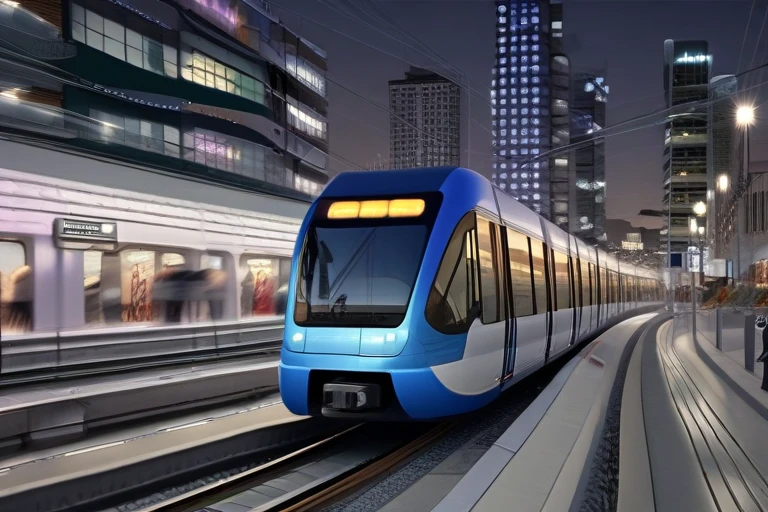
Seoul’s subway map appears to be close to completion, but behind it, there are still marginalized areas called ‘transportation remote areas’. For citizens who have to walk more than 20 minutes to a subway station, the railroad is more than just a means of transportation, it is a core infrastructure that determines the quality of life. Recently, the Seoul Metropolitan Government announced the '3rd Urban Rail Network Construction Plan', which aims to build six new lines, including the Gangbuk Crossing Line and the Nangok Line, and announced a large-scale transportation transformation worth 9.2 trillion won. Will this gigantic project be the priming water that will get the city's blood flowing again, or will it end up being nothing more than a rosy blueprint?
The core of this plan is to seek balanced development of the city by resolving the ‘transport blind spot’ of the Gangbuk and Southwest regions. As a result of the Seoul Metropolitan Government's analysis of public-private joint big data, it was revealed that some areas are suffering from serious imbalances, with rail access taking more than 20 minutes. To solve this problem, a total of six core routes were selected, including the Gangbuk Transverse Line, Nangok Line, Seonam Line, Seobu Line, and extensions of the Seobu Line and Sillim Line. Once this 68.5 km long railway network is completed, citizens' average subway access time is expected to be dramatically shortened from the current 9.97 minutes to 8.03 minutes. This means that approximately 7.83 million citizens will directly benefit, and it is expected to serve as a physical bridge to reduce the spatial gap in Seoul.
However, there is still a high wall called ‘economic feasibility’ between policy will and reality. The Gangbuk Crossing Line and Nangok Line were included in the 2nd urban rail network plan in the past, but due to the low cost-benefit (B/C) ratio, the project has repeatedly faced difficulties in carrying out the project. In this third plan, the city of Seoul worked hard to increase business feasibility by drastically reducing the number of stations and reflecting future development plans in large quantities. In particular, the strategy is to organically combine regional development projects such as Mok-dong redevelopment and Sillim District 7 with route planning, and use it as a driving force for urban regeneration beyond simply expanding the railway network. Even in a situation where the economic feasibility index does not exceed 1.0, the Seoul Metropolitan Government’s efforts to secure the feasibility of the project under the justification of ‘social utility’ and ‘regional balanced development’ are visible.
The key variable that will determine the success or failure of the project depends on the government's reform of the preliminary feasibility study (TA) system and political judgment. Recently, the Ministry of Strategy and Finance has strengthened the items of balanced regional development and public transportation efficiency in the preliminary evaluation criteria, creating an environment in which the policy logic promoted by Seoul City will gain strength. However, as this is a project that involves investing a huge budget of over 9 trillion won, budget support and close cooperation from the central government are essential prerequisites. In addition, external factors such as changes in private investment conditions and increased construction costs, such as the Western Line, which is being promoted as a private project, are also factors that threaten the continuity of the project. The Seoul Metropolitan Government is speeding up administrative procedures with the goal of passing the preliminary examination within the 9th term of popular election, but the speed of the project may change at any time depending on complex interests and political situations.
Experts advise that this announcement is positive in that it provides policy consideration for transportation-disadvantaged areas, but that it must be supported by thorough financial planning. Due to the low-profitability nature of the light rail project, the possibility of an operating deficit cannot be ruled out, which could directly put a burden on the city's finances. Additionally, the prevailing analysis is that the impact of railway line expansion on the real estate market will be limited in the short term. Simply drawing routes is not enough; a true ‘transportation transformation’ can only be completed when the efficiency of the bus route system linked to the railway network and the development of areas near stations are carefully coordinated. Attention is being paid to how Seoul City will communicate with citizens and shape this grand discourse in the remaining procedures, including public hearings and city council hearings.
■ Conclusion and analysis outlook
The 3rd urban rail network construction plan presented by Seoul City goes beyond a simple construction plan and contains the values of ‘balance and connection’ that a huge city called Seoul should pursue. As weighty as the 9 trillion won budget and 6 routes give, the ripple effect this project will bring will be an important turning point that will change the daily lives of residents in the Gangbuk and Southwestern regions. Now the ball is in the hands of the Ministry of Land, Infrastructure and Transport, the Ministry of Strategy and Finance, and the citizens. Rather than being buried in political rhetoric or short-term results, we hope to build a ‘sustainable transportation network’ that returns tangible benefits to citizens based on detailed financial planning and unwavering momentum. Until the day when Seoul's subway map is redrawn, speedy execution that can increase citizens' experience is needed more than ever.
* This post is an analysis column that is automatically recreated in the style of a current affairs critic's commentary by analyzing real-time Google Trends popular search terms and related major articles.
댓글목록 0
등록된 댓글이 없습니다.