
A major shift in national defense brought about by the population clif…
페이지 정보

본문
A major shift in national defense brought about by the population cliff: Reorganization of military ranks for the first time in 64 years and a leap forward into an AI army
Written on: June 12, 2026 | Column by current affairs critic specializing in IT/media
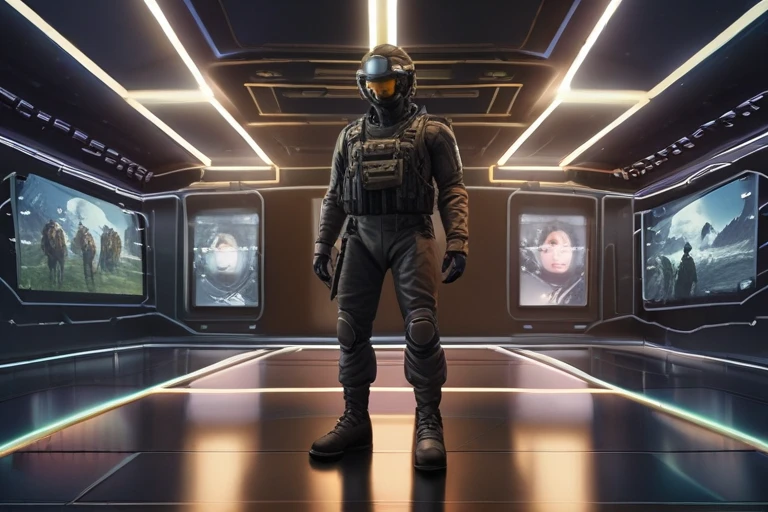
The clock on South Korea’s national defense is rapidly speeding up. This is because a time has arrived where the customs of the past are no longer valid, as a huge wave known as the ‘population cliff’ sweeps past. The 2040 roadmap recently announced by the Ministry of National Defense goes beyond simply reducing the number of troops and contains the will to fundamentally improve the structure of the military. We provide an in-depth analysis of the huge winds of change facing our military, from changes in the soldier rank system that has been maintained for over 60 years since its introduction in 1962, to strategies for training cutting-edge elite troops using AI and unmanned systems.
The most notable change in this defense reform is the reduction of the soldier rank system. It has been consistently pointed out that the current structure of four levels from private to sergeant is a product of the past, when the service period was 36 months, and does not fit with the modern service environment, which has been shortened to 18 months. The Ministry of National Defense announced practical changes, such as streamlining it into three stages to increase administrative efficiency and considering the abolition of the private rank, which is essentially a new recruit training course. On the other hand, the non-commissioned officer rank is planned to be expanded from the existing 4th level to 5th level to resolve the stagnation in promotion of long-term service members and encourage executives with expertise to play a central role in the military. This is not simply a change in rank insignia, but a structural improvement that allows soldiers to focus more on their original duties within a shorter service period.
A major reorganization of the workforce structure is also a key strategy worth noting. The Ministry of National Defense is pursuing 'executive-centered eliteization' by drastically increasing the proportion of executives from the current 40% to 63% by 2040, and relatively lowering the proportion of soldiers from 60% to 37%. This is an inevitable choice to respond to the problem of rapidly decreasing military service resources, and is also a desperate measure to ensure the stability of the unit with a focus on highly skilled professional soldiers. In addition, while maintaining the framework of the conscription system, we are formalizing the introduction of a 'selective conscription system' that combines recruitment methods in some areas, seeking flexibility in the overall military service system. The gradual reduction and abolition of the supplementary service system is also part of this effort to improve manpower management efficiency, showing the military's concern about deploying limited resources more strategically.
From a technological perspective, our military is attempting to transform into a futuristic military structure called ‘AI-based manned/unmanned complex combat system’. The plan is to compensate for the military shortage caused by the population cliff with cutting-edge technology. To this end, the plan is to expand drone and unmanned aerial vehicle power to 30 times the current level. In addition, the unit structure, including the integration of the army's corps, division-centered unit reorganization, and establishment of the Marine Corps Operations Command, will also be redesigned to suit the aspects of modern warfare. Surveillance operations will also be converted to an AI system to reduce dependence on manpower and improve the quality of surveillance, while transfer of coastal surveillance missions to the Coast Guard is also being considered. These changes reflect the will to internalize cutting-edge science and technology as a core military asset under the goal of ‘achieving operational goals in the shortest time with minimal damage.’
Meanwhile, efforts are being made to improve human rights and morale within the military. The recent incident of soldier mistreatment in Cheorwon-gun represents the seriousness of the matter to the extent that the military's investigation subject has been upgraded, showing that the military is facing social demands to eradicate internal injustice and ensure the safety of soldiers. In contrast, some local governments, like Cheorwon County, are building a win-win model to boost the morale of soldiers, such as providing local gift certificates to exemplary soldiers who have stepped up to support the public, or holding meetings to welcome soldiers who voluntarily enlist as permanent residents. In addition, our military is doing its best to secure borders and strengthen security despite the instability of the overseas situation, such as the ongoing battle to eradicate IS in Iraq and other places. These various cases suggest how important it is for the military not only to evolve technologically, but also to strengthen its cultural integrity by respecting the value of each member.
■ Conclusion and analysis outlook
The South Korean military is currently being forced to choose between survival and leap forward amid an unprecedented crisis called a population cliff. The reorganization of the class system and AI-centered eliteization for the first time in 64 years is not a simple change, but an essential structural improvement to survive in the future security environment. However, in order for military reform to be successful, it must be followed by guaranteeing the human rights of soldiers and fundamental advancement of the military service environment as well as the introduction of advanced weapon systems. When technological advancement does not replace the sacrifices of soldiers, but becomes the foundation for providing a safer and more professional service environment, the Republic of Korea military will be able to overcome the demographic cliff and stand tall as a future-oriented strong military.
* This post is an analysis column that is automatically recreated in the style of a current affairs critic's commentary by analyzing real-time Google Trends popular search terms and related major articles.
- 이전글격변의 채널A: 콘텐츠 대개편과 미디어 신뢰의 갈림길 26.06.12
- 다음글호르무즈를 넘어 대구로: UAE가 '천궁-Ⅱ'를 직접 공수해가는 이유 26.06.12
댓글목록
등록된 댓글이 없습니다.