
Recurring tragedy, death under the name of ‘custom’: Analysis of the H…
페이지 정보
작성자 playbbs 작성일 26-06-11 16:42 조회 156 댓글 0본문
Recurring tragedy, death under the name of ‘custom’: Analysis of the Hanwha Aerospace explosion disaster
Written on: June 11, 2026 | Column by current affairs critic specializing in IT/media
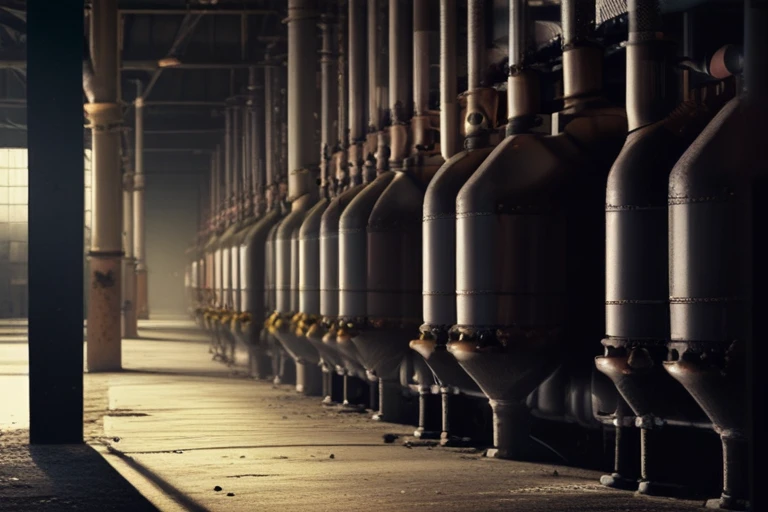
Five precious lives were lost when another fire swept through a defense plant in Daejeon. For a high-tech industrial site responsible for national security, the entire thinking behind it is too outdated and sloppy. Through this incident, we must take a hard look at the fundamental flaws in the company's safety management system to see how complacency and dangerous work methods tolerated in the name of 'custom' led to a large-scale disaster. Rather than simply dismissing it as a machine malfunction or an accidental accident, the series of circumstances that occurred at the site clearly show how deeply insensitivity to safety is rooted in our society.
The key cause of this explosion is that field workers directly performed pipe repair work, which was the domain of an external professional company. Although the gunpowder sludge generated during the rocket propellant manufacturing process is a very dangerous substance, workers have repeatedly made dangerous attempts to scrape it out with tools to unclog pipes. According to the statement obtained by the police, it appears that pipe blockages in the washing room in Building 56, where the accident occurred, have occurred frequently recently, and it is highly likely that sludge removal work was carried out routinely using a tool called ‘phlegm’ among workers. It is highly likely that this was an arbitrary action that was not specified in the formal standard operating procedures (SOP), and whether the company was aware of the existence of such dangerous work and neglected it will be a decisive issue in determining future legal liability.
Investigative authorities are sending the tools and residues found at the scene to the National Institute of Forensic Science for detailed identification, and are intensively investigating where the ignition point of the accident was and why the safety device to prevent the explosion did not work properly. In particular, Hanwha Aerospace claims to be operating a standard process to wash away gunpowder by dividing the process into three stages, but in reality, it has relied on manual cleaning work without fundamentally solving the problem of gunpowder residue accumulating in pipes. The police are analyzing a large amount of data, about 5,400 items confiscated from headquarters and business sites, and closely contrasting the effectiveness of safety training and the falsity of risk assessment reports. If a company is aware of the risks of work but transfers the risks to internal workers to save time or the cost of calling an external company, it will be difficult to avoid severe punishment under the Serious Accident Punishment Act.
Hanwha Aerospace's Daejeon plant had experienced several explosions prior to this accident and continued to be questioned about its safety management capabilities. Despite the large number of casualties caused by large-scale explosions that occurred in succession in 2018 and 2019, the fact that a similar type of accident occurred again in 2026 proves that the company's safety management system was virtually useless. The company promised extensive safety enhancement measures after past accidents, but workers on site were still forced into an ‘urgent situation’ where they had to manually unclog pipes. This is a structural problem that cannot simply be attributed to the negligence of individual workers, and the company's management, which failed to prevent repeated tragedies, appears to have no justification for avoiding legal responsibility beyond moral responsibility.
Currently, the police and labor authorities are accelerating the investigation by booking officials, including CEO Son Jae-il, on charges of violating the Serious Accident Punishment Act and causing manslaughter through occupational negligence and banning them from leaving the country. As the victims' families are observing the forensic process and demanding to uncover the truth, the investigation team has a responsibility to conduct a thorough investigation that leaves no trace of suspicion. Rather than simply finding mechanical defects, we must clearly reveal why field workers had no choice but to take risks and lift tools themselves, and whether there was management negligence or pressure to cut costs hidden behind it. This investigation should not only resolve this accident, but also serve as a starting point for eradicating all dangerous work methods carried out in the name of ‘customs’ in our industrial sites.
■ Conclusion and analysis outlook
This Hanwha Aerospace explosion disaster is a painful lesson that shows what a terrible price we pay when ‘safety’ is limited to slogans. The company's insensitivity to safety, which did not change despite repeated accidents, and the absence of a management and supervision system that failed to monitor this, ultimately put the lives of workers who sweated in the field as collateral. True prevention of recurrence does not lie in simply repairing facilities or revising manuals. Only when there is a major change in management philosophy that does not ignore the reality of the workplace and prioritizes worker safety over production efficiency will it be possible to finally break the cycle of this tragedy. Investigative authorities must demonstrate the severity of the law and set an example to prevent such a disaster from happening again, and companies must show fundamental change by making safety their top priority through serious reflection.
* This post is an analysis column that is automatically recreated in the style of a current affairs critic's commentary by analyzing real-time Google Trends popular search terms and related major articles.
댓글목록 0
등록된 댓글이 없습니다.