
The Dilemma of U.S. Navy Ship Construction: Opportunity for Alliance o…
페이지 정보
작성자 playbbs 작성일 26-06-11 15:48 조회 152 댓글 0본문
U.S. Navy Shipbuilding Dilemma: Opportunity for Alliance or Wall of Nationalism?
Written on: June 11, 2026 | Column by current affairs critic specializing in IT/media
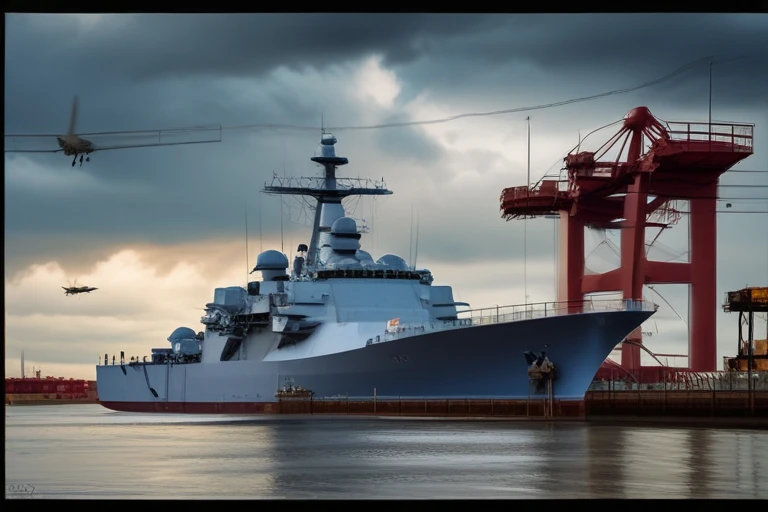
The adage that he who controls the sea controls the world is still valid today, but the industrial foundation of 'ship building' to maintain that hegemony lies in an unprecedented geopolitical and political turbulence. The ‘MASGA’ project, which began as the U.S. Navy reached out to the shipbuilding capabilities of its allies Korea and Japan to modernize its aging fleet, recently met with the strong protectionist stance of the U.S. Congress. A fierce battle is taking place over whether the United States will borrow external power to fill the security gap, or whether it will stick to its own difficult path for the political cause of protecting domestic jobs and industries.
The U.S. Department of Defense is experiencing a serious bottleneck that is slowing down ship construction due to a shortage of skilled workers and aging shipyard infrastructure, and has been planning a strategy to leverage the capabilities of allied shipyards to overcome this. In fact, the 2027 fiscal year budget allotted a large amount of funds to research and utilize the shipbuilding capabilities of allied shipbuilders, raising expectations that this would become a new growth engine for the Korean shipbuilding industry. However, the situation took a sharp turn when the U.S. House of Representatives Armed Services Committee recently passed an amendment during its review of the National Defense Authorization Act (NDAA) to limit the use of U.S. Navy combat vessel construction budgets to overseas shipyards. This is a representative example of the direct conflict between the US administration's pragmatic security strategy and Congress's political interests.
The U.S. Congress members who led this bill are asserting the strong ‘America First’ logic that U.S. military spending must lead to job creation and reconstruction of the industrial base in the United States. For lawmakers whose districts have large shipyards, building warships goes beyond simple defense policy and is a key political task that will allow them to prove their influence to voters ahead of the midterm elections. They argue that the very idea of building U.S. Navy ships with foreign labor could be a threat to national security, and are risking their lives to establish a legal mechanism to block overseas outsourcing. Ultimately, the macro goal of security is blocked by the micro political logic of protecting domestic industries, and the model of cooperation with allies is in danger of losing momentum.
The joys and sorrows of Korean shipbuilders are mixed depending on whether or not they secure a production base in the United States. Hanwha Group has taken a preemptive response by establishing a system capable of direct shipbuilding in the U.S. through the acquisition of Philly Shipyard and securing a stake in Austal, and is expected to gain an advantage in this regulatory phase. On the other hand, companies that have not secured a local production base, such as HD Hyundai Heavy Industries, have attempted to enter the market through strategic partnerships with American companies, but if congressional regulations become a reality, they will have to take on the more difficult task of investing locally or building production facilities directly. Now, it is not enough for the domestic shipbuilding industry to simply provide excellent construction technology, and it is being forced to adopt a difficult localization strategy that requires utilizing local U.S. labor and directly operating infrastructure.
Meanwhile, the security environment in Northeast Asia and the Middle East is becoming more complex and dangerous due to Iran's threat to close the Strait of Hormuz and China's ambition to secure shipping rights in the East Sea. As the invisible information war surrounding military secrets intensifies, as in the case of the Chinese student who took unauthorized photos of the Busan naval base, the United States is under strategic pressure to keep continental powers in check by uniting maritime powers. In this situation, the U.S. Congress's closed shipbuilding policy also carries the risk of becoming a self-defeating action that will slow down the expansion of U.S. naval power in the long term and ultimately weaken the maritime security system with its allies. In other words, the United States is at a critical crossroads: whether to seek alliance cooperation to build a warship more quickly, or to build an isolated fortress to protect its own shipbuilding industry.
■ Conclusion and analysis outlook
As a result, the U.S. Congress's move to ban overseas shipbuilding requires the Korean shipbuilding industry to have 'political responsiveness' beyond 'technological ability'. Although it is too early to make a hasty conclusion as there are still several procedures remaining, including Senate and House coordination and presidential signature, until the final bill is finalized, it is clear that the U.S. maritime and defense industry market is no longer a simple export market, but has become a ‘political battlefield’ where localization and job sharing are essential. Domestic companies are faced with the difficult task of considering aggressive investments to secure production bases in the United States, while at the same time proving their value as strategic partners that fill the security gap in the United States and overcoming political thresholds.
* This post is an analysis column that is automatically recreated in the style of a current affairs critic's commentary by analyzing real-time Google Trends popular search terms and related major articles.
댓글목록 0
등록된 댓글이 없습니다.