
Weather is energy: rediscovery of ‘weather data’ that opens the era of…
페이지 정보
작성자 playbbs 작성일 26-06-23 05:25 조회 526 댓글 0본문
Weather is energy: Rediscovery of ‘weather data’ to open the era of renewable energy
Written on: June 23, 2026 | Column by current affairs critic specializing in IT/media
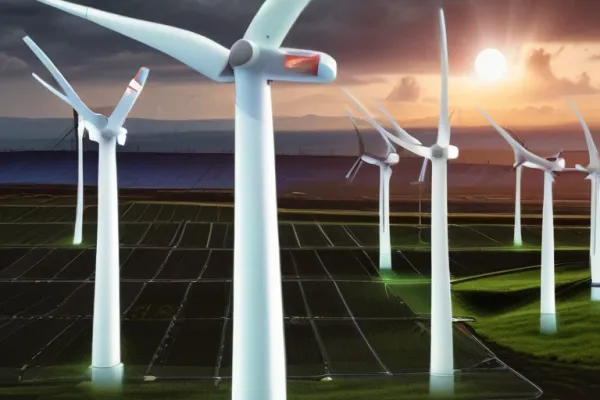
In modern society, the weather has gone beyond the everyday concerns of deciding whether to take an umbrella or not, and has quickly emerged as a key variable directly related to the country's energy security. Recently, as the proportion of renewable energy such as solar and wind power has increased rapidly, variable weather conditions have been pointed out as a major cause of shaking the stability of the entire power grid. In this situation, there are growing voices calling for the Korea Meteorological Administration's forecast to be upgraded to essential data for national power supply and demand, rather than just weather information. As worsening weather conditions such as rain and strong winds repeat across the country, establishing a legal foundation for efficient management of renewable energy is emerging as an urgent task.
Recently, our country has been experiencing increased climate volatility, with frequent showers and heavy rain throughout the country. Unpredictable weather continues, with up to 80 mm or more of rain falling on Jeju Island, while showers accompanied by gusts of wind and hail fall in the metropolitan area and Gangwon region. Such worsening weather not only causes inconveniences in the daily lives of citizens, but also causes a direct blow to energy production sites, such as drastically reducing solar radiation from solar panels or limiting the operation of wind power generators. If the Korea Meteorological Administration's precise forecast is not supported, power generation forecasts are bound to be wrong, which has a chain effect leading to instability in the power system.
Based on this awareness of the problem, a proposal for a ‘partial amendment to the Meteorological Act’ is being promoted at the National Assembly level, led by Democratic Party of Korea lawmaker Heo Jong-sik. Currently, the Meteorological Act clarifies the basis for providing meteorological information in specific fields such as marine, aviation, and hydrology, but does not stipulate meteorological information linked to renewable energy, which is the core of the energy transition era. As the legal vacuum continues, it has been pointed out that the Korea Meteorological Administration has limitations in systematically providing information specialized for predicting renewable energy generation. In order to resolve this blind spot, this amendment focuses on specifying the concept of ‘renewable energy weather’ in the law and specifying the roles and responsibilities of the Korea Meteorological Administration.
If the amendment is passed and implemented in earnest, the accuracy of forecasting renewable energy generation is expected to leap to a much higher level than now. Since solar power generation is absolutely dependent on solar radiation and wind power generation is absolutely dependent on wind speed, errors in weather forecasts are directly linked to errors in power generation. If the Korea Meteorological Administration provides dedicated data to support renewable energy operations, power generation companies will be able to optimize facilities and manage power supply and demand more stably based on accurate forecasts. This goes beyond simply improving the profitability of individual business operators and will become a key driving force in accelerating the national energy transition toward carbon neutrality by securing the flexibility of the entire power system.
Energy conversion is no longer a matter of choice, but has become a necessity for survival. Renewable energy has the inherent limitation of large fluctuations in power generation depending on weather conditions, but attempts to overcome this through systematic data science are very encouraging. This bill redefines the National Weather Service's role from simply a weather observation agency to a key data provider supporting energy security. The commitment of several lawmakers who participated in the joint proposal also shows that a consensus has been formed to minimize the volatility of renewable energy and strengthen the stability of the power grid. Combining weather data and energy infrastructure will be a smart and strategic response to prepare for a carbon-neutral era.
■ Conclusion and analysis outlook
We live in an era where weather information is directly related to energy production. The rain and strong winds pouring down across the country are warning us of the seriousness of climate change and at the same time emphasizing how urgent it is to improve the energy system. The amendment to the Renewable Energy Meteorological Act is an institutional evolution appropriate for the era of climate crisis and will be an important turning point that brings the expertise of the Korea Meteorological Administration to the center of energy policy. We hope that the legislative process will proceed smoothly in the future and that more accurate forecasts and an efficient power supply and demand system will be established, allowing Korea to take another step toward becoming an energy powerhouse.
* This post is a commentary by PlayBBS that analyzed real-time Google Trends popular search terms and related major articles.
댓글목록 0
등록된 댓글이 없습니다.