
In an era of climate crisis and complex disasters, how is Korea design…
page information

text
In an era of climate crisis and multiple disasters, how is South Korea designing for safety?
Written on: June 22, 2026 | Column by current affairs critic specializing in IT/media
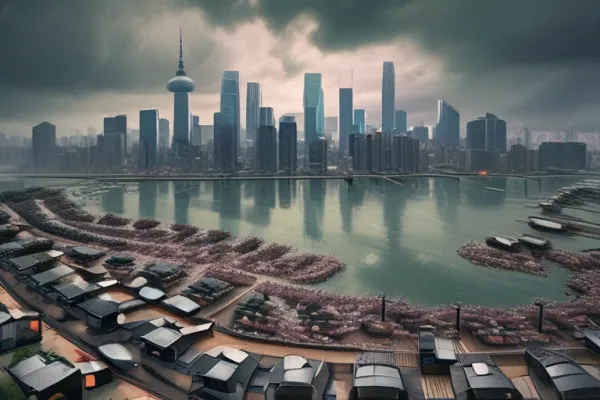
Today, unpredictable weather events and complex risk factors in industrial sites have become part of daily life, and safety is no longer an area of after-effects, but has become a key indicator of national competitiveness. Recently, the Korean government and local governments are presenting a new disaster management model that goes beyond simple disaster prevention and combines artificial intelligence (AI), international solidarity, and a systematic prevention system. Ahead of the summer season with repeated heat waves and torrential rains, we need to take an in-depth look at the multifaceted efforts our society is making to establish a practical response system.
Disaster response at the government level is now expanding beyond borders and into international partnerships. Recently, the Ministry of Public Administration and Security strengthened public administration cooperation with India, and in particular, formalized joining the Disaster Resilience Infrastructure Alliance (CDRI), which was created under the leadership of India. This can be interpreted as a strategic move to recognize that disasters caused by climate change are a global challenge beyond a specific country, and to share advanced disaster management technologies and policies. This international solidarity will serve as a great foundation for revitalizing technological exchange in the disaster safety field and securing more rapid and systematic resilience in a rapidly changing environment.
Local governments and fire authorities are focusing on maximizing on-site response capabilities through ‘preemptive surveillance’ and ‘practical training.’ Through the National Fire Service Commander's Meeting, the National Fire Agency established life-friendly safety measures in preparation for heavy rains and heat waves in the summer, and in particular declared zero tolerance for acts that undermine trust in the organization, such as drunk driving and abuse of power. Gimcheon City also conducted joint practical training with related organizations based on a complex disaster scenario where fire, explosion, and power outage occur simultaneously within an industrial complex. These efforts can be interpreted as a determination to clarify the role of each organization in the event of a disaster and minimize gaps in the entire process from initial response to recovery.
It is also noteworthy that the disaster management paradigm is becoming more sophisticated, combining it with artificial intelligence (AI) technology. Wonju City has been selected as an AI-specialized pilot city by the Ministry of Land, Infrastructure and Transport, and will begin building an ecosystem that will fully introduce AI technology in the areas of transportation, disaster safety, and healthcare from next year to 2030. Self-driving shuttles and smart disaster safety prediction systems are expected to dramatically reduce damage by enabling scientific responses based on data. Gwanak-gu also operates on-site climate crisis education using Starlight Stream and is tightly weaving a social safety net so that residents can develop disaster response skills in their daily lives.
Just as important as technological advancements is a meticulous safety culture that carefully checks even the smallest risk factors in daily life. The Seoul Fire and Disaster Headquarters recently conducted a test on the fire adaptability of portable auxiliary battery storage pouches, warning that commonly used items in daily life can become a fuse for fires, and announced the improvement of the system. The hydrogen chloride leak accident that occurred in the Jecheon Industrial Complex was also a case where neglected chemicals reacted with rainwater, suggesting that disaster prevention requires a tight surveillance network that covers not only large-scale facilities but also blind spots in management. Ultimately, true disaster resilience can only be achieved when technology, policy, and daily safety awareness form the holy trinity.
■ Conclusion and analysis outlook
In conclusion, the Republic of Korea is currently reorganizing its disaster safety net around three axes: international solidarity, building a smart city based on AI technology, and a field-centered practical response system. In the face of the enormous wave of climate change, these proactive changes shown by our society will become the strongest shield that protects the lives and property of the people. In the future, the government, local governments, and individual citizens will need the wisdom to manage disasters through a scientific and systematic system rather than simply leaving it to chance. We must not forget that safety is a natural right that we must enjoy, and at the same time, a social asset that must be constantly maintained.
* This post is a commentary by PlayBBS that analyzed real-time Google Trends popular search terms and related major articles.
- Previous postTaylor Fritz, the star of American tennis, faces the huge task of ‘consolidating the top ranking’ 26.06.22
- next postFallen power and new strategy: Choi Seong-ga’s overturned hierarchy as shown by ‘New Employee Chairman Kang’ 26.06.21
Comment list
There are no registered comments.