
The threshold of the Constitutional Court and the term of office: two …
페이지 정보
작성자 playbbs 작성일 26-06-17 15:02 조회 457 댓글 0본문
The threshold of the Constitutional Court and the term of office: two tests for the rule of law
Written on: June 17, 2026 | Column by current affairs critic specializing in IT/media
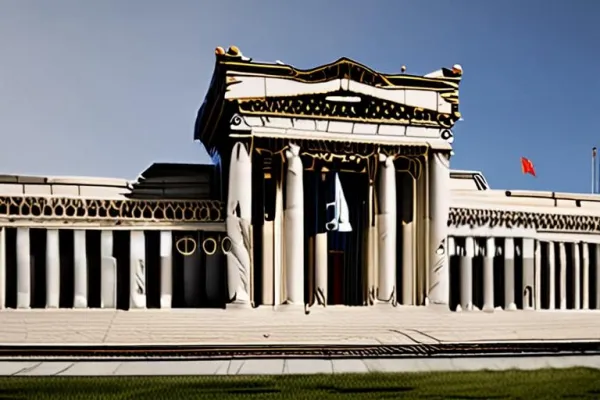
Recently, the attention of the Korean legal community and politicians has been focused on the decision of the Constitutional Court. Citizens' anger over the unprecedented shortage of ballot papers that occurred in early June led to a constitutional petition, but the Constitutional Court closed the first hurdle with its cool-headed legal standards. At the same time, questions about the practical meaning of the rule of law are pouring in as a constitutional complaint filed by a current high-ranking prosecutor over the revision of the Public Prosecution Act, which could shake the very foundation of the judicial system, is added. It is time to take a deep look at the constitutional issues facing our society to see what kind of ruling the Constitution will make on the two paths of citizens' suffrage and public officials' status guarantee.
The ballot paper shortage that occurred during the June 3 local elections greatly shook public trust in the election system, the flower of democracy. The situation in which voters who had been waiting for a long time to vote had to turn away due to a lack of paper sparked controversy over infringement of suffrage rights, and many citizens held the state responsible through a constitutional petition. However, the Constitutional Court decisively dismissed the first lawsuit filed by an ordinary citizen. The Constitutional Court judged that ‘self-relevance’, which is a necessary condition for a constitutional complaint to be established, was lacking. In other words, it is not enough to simply claim that there was a problem with the overall election process, and the claimant must specifically prove that he or she suffered a violation of his or her fundamental rights, such as not being able to directly exercise his or her right to vote at the polling place.
This decision of the Constitutional Court once again confirmed the strict requirements for constitutional complaints contesting the exercise or non-exercise of public power. The Constitutional Court concluded the trial without hearing the merits of the case, noting that there was no explanation as to whether the National Election Commission in charge of the jurisdiction in which the claimant resided did not provide enough ballots or whether his or her voting was actually stopped as a result. This shows the judiciary's conservative approach that emotional appeals or raising general issues alone cannot secure constitutional protection. Currently, the remaining three constitutional petitions, including a large-scale lawsuit led by attorney Do Tae-woo and involving about 35,000 people, are still in the preliminary review stage, so it is expected that a new precedent will be established regarding the scope of responsibility for election management depending on how the Constitutional Court handles these cases in the future.
Meanwhile, another constitutional conflict, different from the ballot incident, occurred within the prosecution. Kim Seong-dong, head of the Supreme Prosecutor's Office's inspection department, filed a constitutional appeal and a provisional injunction to suspend the prosecution's effect, claiming that his dismissal from his position following the enforcement of the Public Prosecution Act was unconstitutional. The Public Prosecution Service Act provides for succession to the positions of prosecutors in existing prosecutors' offices, but makes an exception for 'termed prosecutors'. It is argued that this exception is in fact aimed only at specific public officials, such as the head of the inspection department. Deputy Prosecutor Kim strongly criticizes the National Assembly for effectively dismissing specific public officials belonging to the executive branch through law, saying that it undermines the principle of separation of powers and goes against the trust protection principle of guaranteed tenure.
This response by Chief Prosecutor Kim raises important questions about the extent to which public officials can be permitted to secure their status and exercise their personnel rights under the law. He argues that the forced termination of the two-year term specified in the Prosecutor's Office Act due to legislative action by the National Assembly is a violation of the right to equality and a violation of the principle of prohibition of excess. In particular, it is emphasized that excluding only the head of the inspection department from succession when the position of prosecutor general is vacant is discrimination without reasonable grounds. If the Constitutional Court hears this case, the key issue will be how to find a balance between the discretionary scope of legislative power and the intrinsic value of the career civil service system. This is expected to be a major milestone in the issue of status security in the public service community, which goes beyond simply the issue of one public official's future, and can be repeated every time there is a change in government or a revision of the law.
■ Conclusion and analysis outlook
The protection of citizens' suffrage, symbolized by the lack of ballot papers, and the issue of securing the status of public officials triggered by the revision of the Public Prosecution Cleaning Act are all directly related to the values pursued by our Constitution. The Constitutional Court maintains the judiciary's prudence by imposing strict procedural standards on citizens' voices, and strives to apply the principles of separation of powers and the rule of law to requests for relief for public officials' rights. These two incidents ask how our society should resolve conflicts and move forward based on the two pillars of democratic procedures and legal stability. We hope that the future decisions of the Constitutional Court will serve as an opportunity to build a transparent and fair national system.
* This post is a commentary by PlayBBS that analyzed real-time Google Trends popular search terms and related major articles.
댓글목록 0
등록된 댓글이 없습니다.