
Unstoppable tragedy, a test of ‘safety management’ faced by POSCO Grou…
페이지 정보
작성자 playbbs 작성일 26-06-17 11:45 조회 234 댓글 0본문
Unstoppable tragedy, a test of ‘safety management’ faced by POSCO Group
Written on: June 17, 2026 | Column by current affairs critic specializing in IT/media
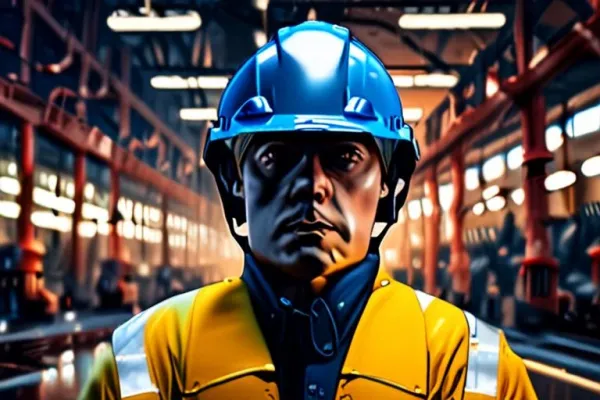
There is no news that makes management's heart sink more than bad news coming from the industrial field. In particular, the fact that POSCO, a giant corporation that supports the foundation of Korean industry, received an emergency call from the Ministry of Employment and Labor due to a series of casualties has significant implications for our society. The unfortunate fall death of a worker in his 30s at the Shinansan Line double-track railway construction site on the 9th is more than just an accident, it raises painful questions about whether the company's safety management system is actually working at the site. This meeting, where POSCO Group Chairman Jang In-hwa bowed his head and called for ‘restoration of trust’ at the Sejong Government Complex, will be an important watershed in assessing whether POSCO can break the cycle of repeated tragedies and be reborn as a truly safe company.
This meeting was a strong warning prepared by the Ministry of Employment and Labor to completely reform POSCO Group's safety management policy. This is already the fourth fatal accident that has occurred at the Shinansan Line Section 3-2 site this year, proving that the risk at the site has reached a critical level. Minister of Employment and Labor Kim Young-hoon put pressure on the need for special safety measures appropriate for high-risk workplaces to be implemented on site, and strongly urged expanded safety investment and strengthening of the practical authority of health managers. Key executives, including Chairman Jang In-hwa, have shown their determination to mobilize all capabilities at the group level to eradicate repetitive disasters that occur in the field, but the government and public opinion are focused on how past promises will lead to concrete actions in the field.
The countermeasure proposed by Chairman In-Hwa In-Hwa consists of very specific and intensive prescriptions. The most notable part is the unprecedented promise to convert all safety experts at the Shinansan Line site, where accidents were concentrated, to full-time employees and to deploy personnel exceeding legal standards. This can be interpreted as an intention to strengthen the continuity and responsibility of on-site safety management, and includes a plan to conduct thorough management by having a world-class safety professional supervisor on site until the end of construction. These measures go beyond simple staffing, and are interpreted as an expression of the company's strong will to overcome the limitations of the outsourced safety management system and take responsibility for safety directly.
However, some are skeptical about whether these measures will be effective. Last year, POSCO Group continued to make efforts to improve the system, including launching the Safety Special Diagnosis Task Force (TF) and establishing ‘POSCO Safety Solutions,’ a safety-specialized subsidiary. Nevertheless, continuous accidents suggest that structural problems remain, such as internal practices within the organization, lack of communication with field workers, or failure to establish a safety culture. Whether the innovation plan announced this time will lead to actual safety investment and site-centered preventive activities using past failures as a lesson, or whether it will be just another formality depends solely on the strong driving force of management and changes in the field.
This task facing POSCO Group goes beyond simply avoiding legal punishment; it is a survival strategy to regain the public’s trust. The ‘resolute determination’ that Chairman Jang emphasized must now be proven not as a sacrament of words, but as actual results in the field where not a single worker is sacrificed. The policy of reexamining the safety systems of all affiliates covering the construction and steel industries from scratch is encouraging, but what is more important is the safety awareness of those who operate them rather than the sophistication of the system. Establishing flexible governance that broadly accepts the opinions of experts and directly reflects the voices of field workers in safety policies may be the only way to prevent repeated tragedies.
■ Conclusion and analysis outlook
A company's growth is completed not only through economic performance, but also through the value of protecting the lives of the workers who supported its growth. The intensive safety reform plan prepared by POSCO Group in the wake of this accident should become the standard for safety management that large Korean companies should pursue. In order to no longer be stigmatized as a ‘repeated disaster,’ a fundamental change in corporate culture that recognizes safety as a top investment rather than a cost, along with a firm commitment from management, is needed. We hope that this promise will lead to results that practically guarantee the safety of the site, and that we will be reborn as a workplace where workers can work with peace of mind and a company that the public trusts and watches over.
* This post is a commentary by PlayBBS that analyzed real-time Google Trends popular search terms and related major articles.
- 이전글 Prelude to Kansas City: A World Cup night where Messi's legendary hat trick and Zidane's name intersect
- 다음글 Icon of the century, contrasting light and shade on the final stage: 2026 North and Central America World Cup Report
댓글목록 0
등록된 댓글이 없습니다.