
In the era of climate crisis, it is time to abandon the old shield of …
page information

text
In the era of climate crisis, it is time to abandon the old shield of ‘post-mortem recovery’
Written on: June 17, 2026 | Column by current affairs critic specializing in IT/media
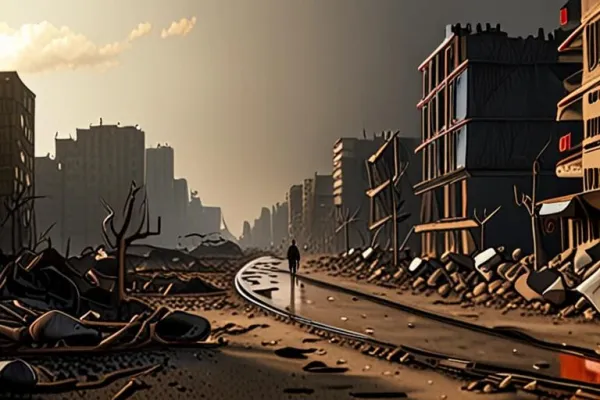
Recently, news of unusual weather events heard from all over the world is no longer a story from a distant country. The comfort of daily life with clear skies often falls apart helplessly in the face of sudden heat waves and localized heavy rain. From a massive storm system off the Gulf Coast of the United States to high temperatures exceeding 30 degrees across South Korea, the Earth is sending us a warning right now. How should we face this enormous climate variability that cannot be predicted using past empirical rules alone? We have now reached a point where we need to go beyond simply consuming the weather as ‘information of the day’ and consider systematic strategies for survival.
Recent meteorological data from the Korean Peninsula clearly show that summer climate patterns have completely changed. If you look at the weather forecast from June 12th to 16th, you can see that heat waves have become a daily occurrence, with daytime temperatures easily exceeding 30 degrees in major cities, including Seoul. What is especially noteworthy is the fact that the frequency and intensity of localized heavy rain has increased incomparably compared to the past. The Korea Meteorological Administration's data does not just indicate a rise in temperature, but also warns that unexpected and unpredictable rainfall may invade our daily lives at any time. These weather changes are directly related to crop damage and facility safety issues, and have become a social challenge that citizens can no longer be asked to respond to individually.
This trend of climate change is not just a problem limited to Korea, but a global phenomenon. A massive storm system captured off the coast of Texas, USA, or erratic strong winds in northern Poland prove that extreme weather is not limited to specific regions. Cases in which weather conditions are even cited as a cause of accidents, such as the skydiving plane crash that occurred in Missouri, suggest that weather is having a fatal impact on all areas of human activity. Additionally, energy price fluctuations linked to the international situation are also closely related to changes in global climate patterns. In other words, climate has now evolved beyond a simple natural phenomenon into a complex risk that penetrates the economy, society, and safety.
Local governments’ efforts to respond to climate risks are finally showing signs of change. The ‘prevention-oriented disaster response paradigm’ declared by Chuncheon City has significant implications. The intention is to break away from the passive administration that focused on recovery after damage occurred in the past and establish a preemptive disaster prevention system to prevent damage from heat waves and flooding at the source. From dredging rainwater drains to inspecting landslide-prone areas and providing cooling supplies for the vulnerable, this tight network-based administration is an essential virtue that local governments must possess in the era of climate crisis. The declaration that the era of 'losing cows and repairing barns' is over represents our society's mature attitude in accepting climate change as a reality.
However, upgrading technology and administrative systems alone is not enough. In an era of climate crisis, citizens need new literacy skills to read weather information. Beyond viewing the weather forecast as simply 'today's temperature', a proactive attitude is required to understand the meaning of the weather variability contained in the forecast and prepare safety measures at each site. Socially, we must further strengthen the safety net for vulnerable groups and prepare a multifaceted buffer against the economic shock that climate change will bring. In the end, the climate crisis is not a problem that can be solved only with technology; it is a huge challenge that can only be overcome when a change in everyone's perception and cooperation in the community combine.
■ Conclusion and analysis outlook
We are now in the midst of an era where climate dominates our daily lives. Natural disasters have now become a routine that repeats every year rather than an exceptional event, and our response to them must also be more thorough and preemptive. As in the case of Chuncheon City, a prevention-oriented administrative system must be strengthened, and individuals must quickly read crisis signals contained in climate information and prepare for them. The climate crisis is both a threat to us and a test of how we can create safer and more sustainable communities. The preventive measures we take today will be our strongest shield against future disasters.
* This post is a commentary by PlayBBS that analyzed real-time Google Trends popular search terms and related major articles.
- Previous postUnpredictable seasonal variations, Alpha Drive One’s bold musical deviation 26.06.21
- next postThe duality of climate: June's landscape where the tranquility of daily life and the destructive power of disaster intersect 26.06.14
Comment list
There are no registered comments.