
A great transformation of public transportation: the future mobility l…
페이지 정보
작성자 playbbs 작성일 26-06-16 19:26 조회 647 댓글 0본문
A great transformation of public transportation: The landscape of future mobility drawn by welfare expansion and technological innovation
Written on: June 16, 2026 | Column by current affairs critic specializing in IT/media
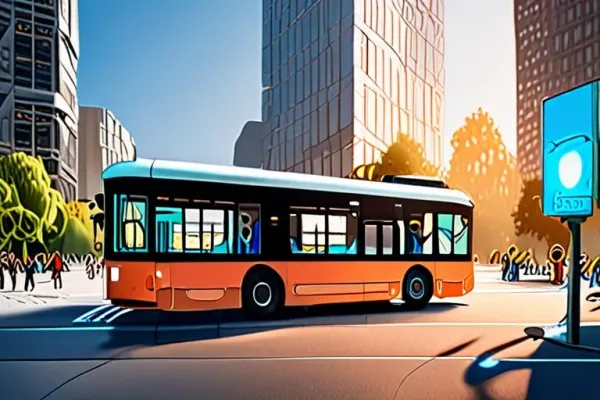
The buses and subways we board every morning are more than just a means of getting to our destinations; they have now become a huge test bed that shows how a society takes care of its members and uses technology. Recently, in the field of public transportation, innovative attempts combining cutting-edge technologies such as artificial intelligence and autonomous driving are being actively carried out, along with welfare policy discussions to guarantee the right to mobility for the elderly. This wave of change goes beyond simply improving transportation convenience and is changing the landscape of our lives in many ways, from refund policies that ease the burden on the household economy to building smart mobility that puts safety first. Currently, Korea is preparing to enter a new era of mobility by seeking to balance welfare, efficiency, and future technology in the public sphere of public transportation.
The hottest topic in public transportation welfare is the question of how far to expand the scope of free riding for the elderly. Currently, the Seoul City Council is moving to expand support for senior citizens' transportation expenses, which was previously limited to urban railways, to city buses and village buses. This is an attempt to accommodate the criticism that discrimination in transportation welfare benefits occurs depending on the region of residence, and the free bus ride system has already been established and is in operation in some regions, such as Daegu and Gyeongbuk. However, in the case of Seoul, the huge budget requirements and the accumulated deficit of public transportation operators are intertwined, and fierce debate is taking place over whether the ordinance will be passed and its financial sustainability. As the elderly population is expected to increase rapidly in the future, there is an urgent need for a sophisticated design that goes beyond simply expanding welfare targets and guarantees universal mobility rights while maintaining financial soundness.
In addition to efforts to reduce blind spots in welfare, the introduction of artificial intelligence technology to maximize the safety and efficiency of public transportation is also accelerating. The recent selection of a public-private consortium, including Sisun AI, for a national project hosted by the Ministry of Trade, Industry and Energy suggests that the bus system is evolving from a simple transportation tool to an intelligent mobility platform. Using edge AI and multimodal sensor technology, they are building a system that detects abnormal behavior, such as passengers' falls or assaults, in real time and monitors drivers' drowsiness or lack of attention to prevent accidents in advance. In particular, the technology to precisely identify the transportation vulnerable while de-identifying personal information through the on-device LLM agent clearly demonstrates the technical will to kill two birds with one stone: improving the quality of public services and ensuring security.
Technological progress goes beyond the safety system inside the bus and is being materialized through trial runs of self-driving buses running on actual roads. The pilot service of the self-driving bus 'I am Whale' currently underway in Goyang-si, Gyeonggi-do is serving as an important opportunity for citizens to experience future transportation in their daily lives and increase acceptance of the technology. This bus, equipped with a level 4 autonomous driving system, is actually circulating on city roads and being verified for operational adequacy and safety. This will be used as key data for establishing policies such as establishing a transfer system or new late-night routes in the future. These demonstration projects prove that autonomous driving is no longer a science fiction of the distant future, but is becoming a realistic alternative to increase the efficiency of public transportation and improve travel convenience.
Meanwhile, the transportation fee refund system, which reduces the actual burden on households, has established itself as a strong incentive to increase public transportation usage. ‘The Gyeonggi Pass’, which is being implemented by Gyeonggi Province, has quickly emerged as Korea’s representative transportation welfare system, exceeding 2 million subscribers in just two years since the service was launched. In addition to the existing government's K-Pass benefits, regionally tailored policies, such as expanding the age standard for young people and increasing the refund rate during commuting hours, drew a warm response from users. This creates a virtuous cycle in which the use of public transportation goes beyond simply economic savings and creates social values such as reducing carbon emissions and alleviating urban traffic congestion. In addition, the popularity of walking tour guides that explore good walking paths around the country using public transportation shows that the value of public transportation as a means of transportation is also connected to the process of finding leisure and romance in our lives.
■ Conclusion and analysis outlook
We are currently living in an era of great transformation where both quantitative expansion and qualitative advancement of public transportation occur simultaneously. By combining warm welfare policies for the elderly and cold technologies such as artificial intelligence and autonomous driving, we are ultimately moving in the direction of guaranteeing the right to equal and safe transportation for everyone. For these changes to be implemented successfully, financial reality, technological stability, and high citizen acceptance must form the holy trinity. When transportation welfare and technological innovation are harmonized, our daily lives will become more convenient, and public transportation will go beyond a simple means of transportation and become firmly established as a core infrastructure that symbolizes the inclusiveness and future competitiveness of our society.
* This post is a commentary by PlayBBS that analyzed real-time Google Trends popular search terms and related major articles.
- 이전글 Seoul city buses are also ‘free for seniors’? Concerns between expansion of transportation welfare and financial soundness
- 다음글 Hanwha Eagles riding a roller coaster, walking a precarious tightrope between hope and despair
댓글목록 0
등록된 댓글이 없습니다.