
A fortress in the sky falls to the desert: Tragedy and challenges of t…
page information

text
A fortress in the sky falls to the desert: Tragedy and challenges of the B-52 strategic bomber crash
Written on: June 16, 2026 | Column by current affairs critic specializing in IT/media
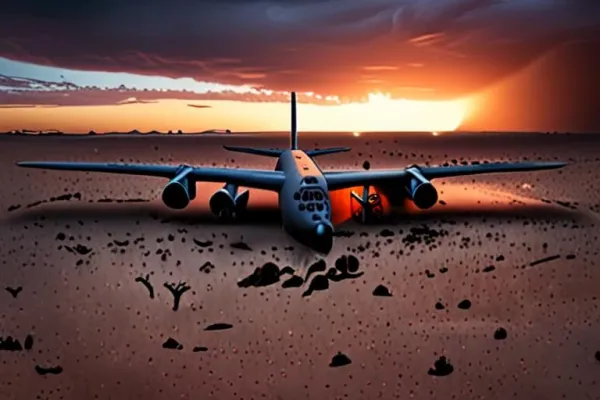
The B-52, an American strategic asset that has dominated the skies over conflict zones around the world for decades, nicknamed the 'Flying Fortress', crashed to a halt on the cold desert sand. The usual routine test flight soon ended in a tragic ending that claimed eight precious lives, and only unrecognizable wreckage and thick smoke remained at the accident site. This accident goes beyond simply the issue of a defect in an old model, and raises fundamental questions about the safety and maintenance system of key strategic assets operated by the U.S. Air Force. This disaster once again proved that even the U.S. Air Force, which prides itself on having the world's strongest military power, is helpless in the face of unexpected technical difficulties and tragedies.
The accident occurred on the morning of the 15th, local time, at Edwards Air Force Base in California, about 160 km north of Los Angeles. The bomber showed abnormalities immediately after takeoff and plummeted into the desert area near the runway. Immediately after the accident, huge flames and a plume of black smoke covered the sky. Air Force authorities immediately dispatched a rescue team and began a recovery operation, but considering the dire conditions at the accident site, they made a tragic initial judgment that it would be difficult for all eight people on board to survive. Deputy Commander James Hayes, who commanded the scene, officially announced that eight great Americans were lost in this accident and expressed deep condolences while conveying the news to the victims' bereaved families.
It turns out that this mission was not just a routine flight, but a precision test flight in support of a radar modernization program. Those on board the accident aircraft included not only military personnel but also skilled civilian experts and government contractor employees, so it is expected to be recorded as a major loss to the national defense industry and research and development fields. After the accident, Edwards Air Force Base immediately closed the airfield, diverted all aircraft operations, suspended all military operations until the 16th, and began a full-scale investigation to determine the cause of the accident. Military authorities predict that this investigation will be conducted while keeping all possibilities open, from aircraft defects to external factors, and that it will take up to six months or more for the final results to be released.
The B-52 Stratofortress, which was deployed in the 1950s, is one of the triangular formations of the U.S. nuclear force, and is a living witness to its history of having been in active service for over half a century, from the Vietnam War to the recent Middle East conflict. However, since production ended in 1962, difficulties in supplying parts and aging of the aircraft have been constantly raised, and the US Air Force has managed to extend its life by procuring parts from dismantled aircraft at the Davis-Monsun base, the so-called 'aircraft graveyard'. Currently, the U.S. Air Force is pursuing next-generation engine design and large-scale performance improvement projects with a budget worth tens of trillions of won, but this accident clearly revealed the risks that active-duty aircraft will have to face until such modernization work is completed. This major casualty accident, which occurred 18 years after a crash in the sea near Guam in 2008, is sounding the alarm to military authorities around the world about the operation of old aircraft.
This tragedy clearly demonstrates the dilemma between operational efficiency and safety of America's strategic assets. As the introduction of the latest bomber costs an astronomical amount of money, the military authorities' desperate measures to make the most of existing assets are inevitable, but the sacrifice of precious human resources in the process can never be justified. In particular, the fact that the accident occurred during a test flight with many civilian experts on board suggests the need to reexamine safety protocols. If defects in the airframe engine or deterioration issues in the design are identified during the future investigation, it is expected that significant changes will be made to the speed and direction of the B-52 performance improvement project currently in progress. This accident will remain as a painful lesson that shows both the technological limitations facing the United States, a military powerhouse, and the resulting human cost.
■ Conclusion and analysis outlook
The remains of the airplane left in the desert at Edwards Air Force Base are not just a bunch of scrap metal, but a record representing the light and dark sides of a strategic asset that dominated an era. In addition to mourning the loss of the eight fallen in the line of duty, the U.S. Air Force must do its best to thoroughly investigate the truth and establish safety measures to prevent such a tragedy from happening again. This incident once again reminded us that operating old equipment that cannot keep up with the pace of technological development ultimately results in the loss of the most valuable resource, people. Through this accident, we must remember that the modernization of weapons systems goes beyond simple performance improvements, but is an essential safety device to protect the lives of those who operate them.
* This post is a commentary by PlayBBS that analyzed real-time Google Trends popular search terms and related major articles.
- Previous postIn an era where pennies are collected and used for investment, the light and dark side of the ‘App Tech’ ecosystem 26.06.16
- next postThe carbon dioxide warning that hit the peaceful commute, the full story of the commotion at Anam Station 26.06.16
Comment list
There are no registered comments.