
Japanese soccer's challenge to overcome the Orange Army's wall: a hot …
page information

text
Japanese soccer's challenge to overcome the Orange Army's wall: The topic raised by the 2026 World Cup
Written on: June 15, 2026 | Column by current affairs critic specializing in IT/media
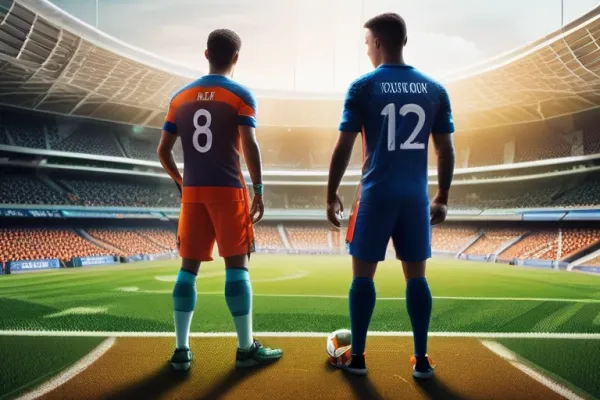
In June 2026, the eyes of soccer fans around the world were heated by the excitement of the World Cup taking place in North America. In particular, the group stage match in which Japan, which has rapidly emerged as a powerhouse in Asian soccer, faced the Netherlands, a traditional European powerhouse, had meaning beyond a simple win or loss. The streets of Tokyo were transformed into one giant stadium, and local fans gathered in public cheering areas such as 'blue-ing!' to share in the historic moment of their national team. Will Japan be able to overcome its reputation as a dark horse and enter the center of the world stage? This match has become a significant test to gauge that possibility.
This match, held in Dallas, Texas, was a fierce battle that showcased the tactical pinnacle of modern soccer. Key players from both teams, including Netherlands' Mickey van der Ven and Frenkie de Jong, and Japan's Ayase Ueda, clashed throughout the pitch, raising tensions to a peak. From the beginning of the game, the Netherlands constantly harassed the Japanese defense with their unique systematic pressure and sophisticated passing work, and Japan responded with quick counterattacks and persistent man-to-man marking. The battle for the ball in midfield between Kaishu Sano and Tijani Rijnders was a scene where the tactical intentions of both teams were concentrated, and the stadium was filled with the cheers of the spectators and the heavy breathing of the players.
The enthusiasm of Japanese soccer fans exploded in Tokyo as well. On the 15th, the expressions of Japanese fans watching the game showed a mixture of nervousness and anticipation. Considering the history of Japanese soccer, which has been frustrated by failing to get past the round of 16 each time in past World Cups, this match against the Netherlands was a watershed to see whether they could truly advance to the quarterfinals. Numerous citizens gathered at the public cheering venue cheered enthusiastically on the fighting spirit of their national team, cheering and cheering according to the game situation relayed in real time. This was a scene that proved that Japanese soccer has become more than just a sports event and has become a symbol of national unity and pride.
Another reason why this match attracted attention is because the Netherlands' status as a traditional powerhouse directly clashed with Japan's rapid growth. Experts pointed out Japan as the strongest dark horse of this World Cup, expressing both doubts and expectations about how well they will be able to implement their soccer philosophy against powerful European teams. In particular, compared to the situation in other countries where superstars such as Vincius Junior are active, the Netherlands was a very difficult opponent with a combination of organizational ability and individual skills. Japanese players tried to maintain their patterns without being intimidated by these giants, and this became an opportunity for the world soccer world to re-evaluate Japan's tactical perfection.
Regardless of the result, this group match was a key episode that enriched the narrative of the 2026 World Cup. The players' intense physical fight and tactical battle that continued throughout the game clearly demonstrated that soccer is not simply a sport played with the feet, but a process of high-level psychological warfare and overcoming the limitations of physical strength. Japan demonstrated the technical detail it had honed to overcome the high mountain called the Netherlands, while the Netherlands did its best to prove their tactical superiority. These high-level matches brought great enjoyment to soccer fans around the world watching the tournament, and set the high standard of performance that the 2026 World Cup aims for.
■ Conclusion and analysis outlook
In the end, the match between the Netherlands and Japan in the group stage of the 2026 World Cup was a signal that Asian soccer was becoming a leading player in the world, not a periphery. Although the evaluation of the result of the game may differ depending on each person's perspective, Japan's persistent pursuit and tactical response clearly left a deep impression on soccer fans around the world. The experience Japan has gained through this World Cup and the proven track record that the Netherlands has proven are making the future of the tournament even more unpredictable. As the saying goes, the soccer ball is round, the final winner and the story of this tournament will be completed in the remaining games that unfold in the future.
* This post is a commentary by PlayBBS that analyzed real-time Google Trends popular search terms and related major articles.
- Previous postThe new mission of the ‘tax protector’ contained in the postman’s mail bag 26.06.15
- next postA ball launched by a 12 million won ring, two scenes left behind by Moon Chae-won's marriage 26.06.15
Comment list
There are no registered comments.