
The pendulum of independent national defense is moving: wartime operat…
페이지 정보
작성자 playbbs 작성일 26-06-14 18:03 조회 244 댓글 0본문
The pendulum of independent national defense is moving: wartime operational control transfer and the future of nuclear-powered submarines
Written on: June 14, 2026 | Column by current affairs critic specializing in IT/media
Two huge waves shaking the foundation of South Korea's security are coming from the Yongsan Ministry of National Defense. The transfer of wartime operational control (OPCON), a long-awaited project of our military for the past several decades, has finally begun to accelerate toward its final destination with a concrete roadmap in place. At the same time, the project to introduce Korean nuclear-powered submarines, called a ‘game changer,’ is also showing tangible results based on technological confidence. The plan announced by Minister of National Defense Ahn Kyu-baek in a series of recent interviews goes beyond simply strengthening national defense capabilities and strongly reflects the Republic of Korea's will to transform itself from a tactical defense system into a country that takes the strategic lead. We would like to analyze in depth how our military is attempting to complete this huge security paradigm shift in close coordination with the United States, as well as its key tasks and prospects.
The core of wartime operational control transfer depends on how to incorporate the principle of ‘condition-based transfer’ into the modern battlefield environment. Minister Ahn Gyu-baek concluded the verification of full operating capability (FOC) through the ROK-US Security Council (SCM) in November and presented a clear schedule to propose 'Year X', the target year for transition, to the presidents of both countries at the end of this year. Some point out that the existing transition conditions are anachronistic, considering the changing aspects of modern warfare, such as the rapid rise of unmanned aerial vehicles such as drones. In response to this, Minister Ahn cited the old idiom ‘100-year subcontracting’ and maintained a firm stance that the endless addition of conditions should not become an obstacle to the restoration of wartime operational control. In other words, rather than continuously modifying the conditions in accordance with the changing battlefield situation, we have chosen a pragmatic strategy of starting the transition based on the sufficient capabilities we currently have and then discussing the details.
There is strong confidence within the military regarding the security gap that is a concern over the transfer of wartime operational control. Minister Ahn emphasized that even if wartime operational control is returned to us, the ROK-US Combined Forces Command will not be disbanded, but rather will develop into a more compact and solid combined defense system with six component commands. This means that the restoration of wartime operational control does not mean a breakup with the US military, but rather an evolution into an advanced alliance in which the Korean military takes the lead and the US military strongly supports it. In fact, our military, from privates to captains, is armed with the confidence that it can win in any war situation, and this is not just a slogan, but is based on a dramatic improvement in the ability to carry out actual joint operations. In the end, the transfer of wartime operational control is a mission of the times and a declaration of minimum security independence that the Republic of Korea must have as a truly sovereign nation.
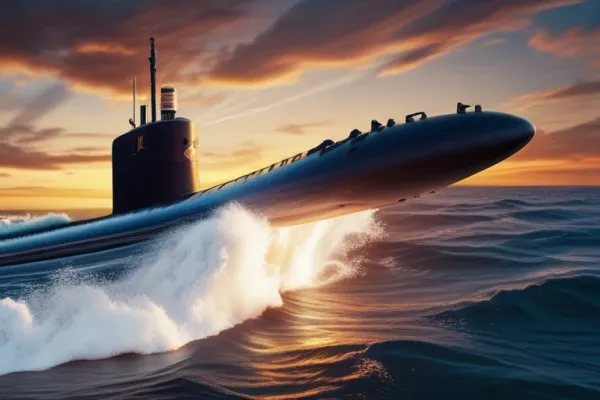
Another key axis that will change the security paradigm is the introduction of Korean nuclear-powered submarines, named the ‘Jang Bogo N Project’. Minister Ahn revealed that he is concentrating government-wide capabilities with the goal of building the first ship in the mid-2030s, an ambitious plan to transform the Republic of Korea from a tactical defense country to a strategic operation country. In particular, we are adhering to the 'domestic construction' policy, which is the most technically and cost-effective, and are continuing close discussions to receive support from the United States for low-enriched uranium nuclear fuel below 20% required for this purpose. Although an official agreement with the United States has not been completed, it is encouraging that the United States is also in the process of fully understanding and accepting the consistent logic and necessity of building the ship directly with our own technology. This is an example that goes beyond the simple introduction of a weapons system and proves that Korea's nuclear technology and defense industry capabilities have reached world-class levels.
The subtle differences in perspectives and coordination of differences between Korea and the United States are also important points to watch in this defense roadmap. There is a clear gap between the timing suggested by the US Forces Korea and the timing our government is targeting for the transfer of wartime operational control. Minister Ahn compared this to a difference of opinion between a married couple and explained that the process of narrowing down different opinions is itself a test of our diplomatic and national defense capabilities. The excellent cost-effectiveness and technological capabilities of Korean submarines demonstrated in the Canadian Next-Generation Submarine Project (CPSP) order prove that we have grown into a leading player in the global defense industry, not just a beneficiary of security. As trust and performance in the defense industry builds, it is expected that it will serve as a useful lever in narrowing differences with the United States on sensitive issues such as the introduction of nuclear-powered submarines and the transfer of wartime operational control.
■ Conclusion and analysis outlook
Considering Minister Ahn Gyu-baek's remarks, the Republic of Korea's national defense is now facing a great transition from 'waiting security' to 'leading security'. The plan to confirm a specific timetable for the transfer of wartime operational control by the end of the year and open the era of nuclear-powered submarines in the 2030s is a heavy responsibility that our military must bear and an unstoppable trend of the times. Of course, there may be difficulties in the coordination process between Korea and the United States, and the uncertainty of modern warfare may weigh heavily on the shoulders of our military. However, the confidence shown by our military and our solid combined defense posture seem to be enough to dispel these concerns. For the day when the Republic of Korea establishes a plan for peace on the Korean Peninsula through its own efforts and stands tall as a strategic nation that maximizes national interests, this current meticulous and rapid defense innovation must not stop.
* This post is a commentary by PlayBBS that analyzed real-time Google Trends popular search terms and related major articles.
- 이전글 Weight and opportunity hidden behind the name: Three landscapes depicted by the name ‘Phase’
- 다음글 Choi Hwa-jeong's lifestyle, a perfect self-directed life where 'self-management' and 'flex' coexist
댓글목록 0
등록된 댓글이 없습니다.