
Genesis on the run: 24 Hours of Le Mans, a technological leap forward …
페이지 정보

본문
Genesis on the run: 24 Hours of Le Mans, a technological leap forward for Korean luxury and a global challenge
Written on: June 14, 2026 | Column by current affairs critic specializing in IT/media
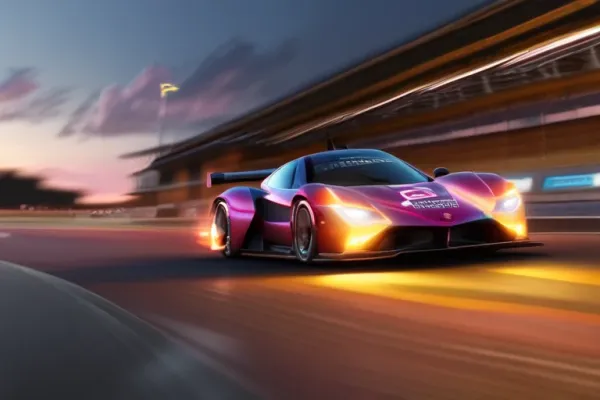
Where the heart of a car races across a circuit at extreme speeds without stopping for 24 hours, the '24 Hours of Le Mans' is more than just a race, it is a gigantic stage that tests the limits of human-made mechanical engineering. In this sacred race that has been going on since 1923, Korean premium brand Genesis set a new milestone by participating in the hypercar class for the first time in Korean automobile history. In the heart of motorsports dominated by Europe's traditional powerhouses, Genesis went beyond the title of simply 'participating' and began a strategic move to imprint the brand's technological identity around the world. We would like to take an in-depth analysis of the meaning of this hot scene and see what kind of inflection point this challenge will be in Genesis' future and expansion into the European market.
The 'GMR-001' hypercar deployed by the Genesis Magma Racing Team is a key medium that visually and technically proves the brand's high-performance DNA in this competition. The special livery, a combination of orange and dark red, symbolizes speed and intense energy, and the Korean 'Magma' lettering on the car body is a symbolic device that proclaims pride and identity as a Korean brand to the world. In particular, the special wrapping film developed in collaboration with France's Hexis is the result of taking into account the harsh environment of endurance racing, which must withstand the extreme heat and aerodynamic resistance generated during high-speed driving. These design details can be said to be strong evidence that Genesis goes beyond being a simple luxury sedan and has the technical perfection required in the extreme field of motorsports.
The biggest practical purpose of this Le Mans participation is ‘accumulation of data’ and ‘transfer of technology to mass-produced cars’. Vehicle durability, heat management, and tire efficiency data obtained in high-load, high-speed driving situations that are difficult to reproduce in general road driving or closed test sites will be irreplaceable assets in the development of future high-performance models. As Hyundai Motor Company President Jose Muñoz and Genesis Business Head Si-hyuk Lee mentioned, racing is no longer just marketing, but a test bed for technological innovation. Genesis plans to incorporate the insights accumulated from this competition into the Magma lineup to be mass-produced in the future to maximize product competitiveness so that customers can experience Genesis' high-performance performance in their daily lives.
Genesis unveiled the interior design of the ‘Magma GT Concept’ and the ‘Magma GT3 Concept’ for the first time in the world at this Le Mans event, concretizing its high-performance vision encompassing road cars and race cars. In particular, the Magma GT3 concept, which reflects GT3 technical regulations, presents Genesis' future vision of a high-performance race car through a design that maximizes aerodynamic performance and cooling efficiency. This goes beyond simply modifying an existing model and is the product of an effort to reinterpret the brand's design philosophy of 'dynamic elegance' to suit the racing environment. The models based on the ‘Genesis
Targeting the European market using motorsports is a very sophisticated puzzle piece in Genesis' global expansion strategy. Genesis, which is currently being sold in 7 countries including the UK, Germany, and France, plans to expand into 4 additional countries including Poland, Austria, Portugal, and Denmark next year, bringing the total to 11 countries. Europe is a market where high-performance premium brands such as Ferrari, Porsche, and BMW are deeply rooted, and proof of overwhelming performance and technology is essential to be recognized here. Genesis' participation in Le Mans is the surest way to imprint the brand's professionalism and high-performance image on European consumers, and this, combined with changes in dealer sales methods, will be a powerful catalyst for expanding its share in the European premium market.
■ Conclusion and analysis outlook
Genesis' challenge at the 24 Hours of Le Mans is more than just an expansion of the territory of the Korean automobile industry; it is an essential rite of passage for the brand to become a world-class 'luxury performance maker.' The strategy of setting the goal of completing the 100-year-old competition and using the data obtained in the process to develop next-generation mass-produced cars clearly shows the direction of 'sustainable high performance' pursued by Genesis. Genesis' technological prowess, proven in the extreme environment of motorsports, will be delivered as new value to global customers through the Magma lineup to be released in the future. This bold challenge won by a Korean brand on the world's best stage will soon be remembered as an important milestone that will establish Genesis as a new powerhouse in the global high-performance market.
* This post is an analysis column that is automatically recreated in the style of a current affairs critic's commentary by analyzing real-time Google Trends popular search terms and related major articles.
- 이전글제네시스의 질주, 르망의 신화에 마그마를 새기다 26.06.14
- 다음글우리 몸과 일상을 파고드는 보이지 않는 위협: 기생충과 현대인의 건강 리포트 26.06.14
댓글목록
등록된 댓글이 없습니다.