
Beyond the wave of digital twins and into the era of physical AI: a hu…
페이지 정보
작성자 playbbs 작성일 26-06-13 23:21 조회 72 댓글 0본문
Beyond the wave of digital twins and into the era of physical AI: A huge tectonic shift in the industrial field
Written on: June 13, 2026 | Column by current affairs critic specializing in IT/media
Today's industrial sites are evolving beyond simply physical spaces where machines run, into intelligent platforms where data flows and is optimized in real time. The recent incident in which digital twin solution company ‘Ian’ won the grand prize at the ‘2026 Korea Virtual Convergence Awards’ symbolically shows this huge technological inflection point. Even amid the anxiety-filled discourse about whether AI will replace human jobs, technology is revealing its true nature in the direction of assisting human judgment and maximizing precision in industrial settings. We would like to deeply analyze how virtual convergence technologies, represented by Metaverse, XR, and Digital Twin, are reorganizing Korea's manufacturing competitiveness, and their technological achievements and future value.
Digital twin technology is no longer a story in science fiction, but has become a standard in industrial sites that require high precision, such as semiconductor factories. The 'DT-AR smart construction management platform' introduced by Ian has dramatically improved the productivity and accuracy of the construction process by integrating 3D design models, 2D drawings, and field scan data into one data system. While existing construction management was a practice that relied on drawings, Excel, and the experience of skilled field workers, it has now completely transitioned to a data-based, objective management system. These innovations are being widely applied and are proving their effectiveness, including POSCO Group's industrial facility construction business management platform, Samsung Electronics and Samsung Display's semiconductor factory (FAB) sites, and even SK Hynix's next-generation cluster.
The essence of virtual convergence technology is not simply to create a virtual world, but to solve real-world problems and maximize industrial efficiency. The companies highlighted at this awards ceremony presented innovative solutions using virtual convergence technology in different fields such as medical care, industrial safety, and education. Attempts to strengthen industrial safety education with live-action-based VR content or to improve the accuracy of procedures by converting medical image data into patient-specific XR data show that technology has evolved from abstract discourse to an on-site solution. This, combined with the digital transformation policy promoted by the government, is combining the three pillars of technology development, human resource training, and fund support, making the soil of the domestic virtual convergence ecosystem more fertile.
Meanwhile, amidst the rapid development of technology, what we need to pay attention to is ‘the unique value that only humans can have in the AI era.’ As artificial intelligence becomes more efficient at handling paperwork and simple repetitive tasks, humans will need to focus more on the 'soft skills' of empathy, ethical judgment, and resolving complex conflicts. Experts warn of the risk of AI generating incorrect information, emphasizing that human insight to critically verify it and make strategic decisions is more important than ever. In other words, AI, as a technological tool, must become a powerful partner that increases productivity in the field, and only when the ultimate responsibility and creative strategy establishment are left to humans will technical coexistence in the true sense become possible.
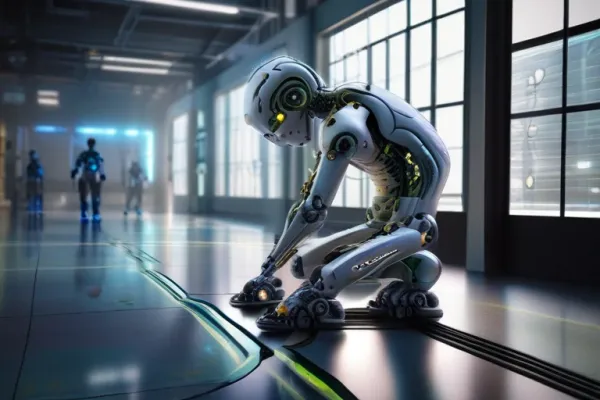
The future of virtual convergence technology is now going beyond simple visual implementation and entering the stage of ‘Physical AI’. The 'Living As-Built' system promoted by Ian has an ambitious vision to accelerate construction automation by linking field data with robots and video data in real time. Linkage with global platforms such as NVIDIA Omnibus advances digital twin data into an AI learning and simulation platform, heralding an era of precise smart construction in which numerous trials and errors are experienced in advance in a virtual environment and errors in reality are minimized. This will be a powerful weapon that will help domestic companies go beyond the domestic market and advance into global markets such as Taiwan, Japan, and India, leading technological exports.
■ Conclusion and analysis outlook
Korea is now leading digital innovation in the industrial field by riding two huge waves: AI and digital twin. The technological achievements confirmed through the '2026 Korea Virtual Convergence Awards' prove that our industry is successfully transitioning from a drawing-centered analog method to a data-centered intelligent system. However, as technology becomes more sophisticated, it must be accompanied by wisdom that does not lose the original value of human critical thinking and ethical judgment. Depending on the harmony between technology and humans in the future industrial field represented by physical AI, the competitiveness of our companies in the global market will become stronger. This is why we need to pay attention to the actions of companies that go beyond simply accepting the changing future and take the lead in technology and expand their ecosystem.
* This post is an analysis column that is automatically recreated in the style of a current affairs critic's commentary by analyzing real-time Google Trends popular search terms and related major articles.
댓글목록 0
등록된 댓글이 없습니다.