
The heart of semiconductors at a standstill, the Achilles heel of the …
페이지 정보

본문
The heart of semiconductors at a standstill, the Achilles heel of the Korean industry revealed by the ready-mix concrete strike
Written on: June 13, 2026 | Column by current affairs critic specializing in IT/media
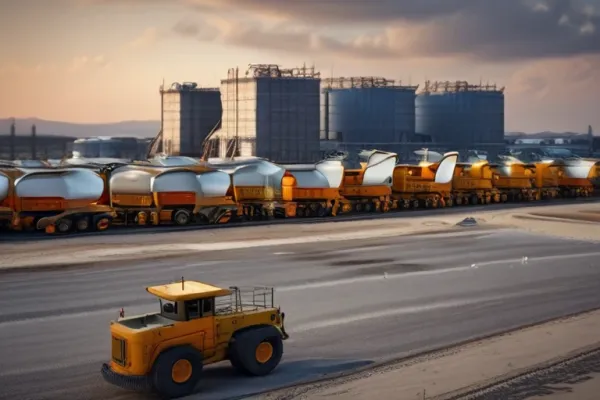
The semiconductor production site, which is responsible for the bloodstream of the Korean economy, encountered an unexpected obstacle. Recently, as the group refusal to transport ready-mixed concrete in the metropolitan area has become prolonged, the clock at key national high-tech industrial sites, such as Samsung Electronics' Pyeongtaek campus and SK Hynix's Yongin semiconductor cluster, has virtually stopped. The blow this situation is inflicting on the semiconductor supply chain, the foundation of our economy, is too serious to be dismissed as simply a conflict between labor and management over an increase in transportation costs. This strike poses a painful question to our society: is it really okay for us to continue to neglect such a vulnerable industrial structure in the midst of competition for global hegemony?
The origin of this refusal to transport ready-mixed concrete lies in the traditional labor-management conflict issues of increased transport prices and recognition of the union's bargaining position. Initially, a provisional agreement was reached through mediation by the Ministry of Land, Infrastructure and Transport to increase transportation fees per synagogue, but the agreement was rejected in a vote by union members, intensifying the conflict again. In response, ready-mix concrete manufacturers are struggling to find a solution to the situation, saying they will change the existing integrated negotiation system to regional negotiations. In particular, ready-mix concrete has a fatal weakness in that there is no substitute for it due to its nature of having to be poured immediately after production, so any disruption in transportation directly leads to a shutdown of the construction site. Currently, the supply of tens of thousands of units of ready-mixed concrete is being disrupted at more than 100 sites, including 25 large construction companies, and the prevailing pessimistic outlook is that if the strike continues into next week, a complete halt to construction is inevitable.
As the spark of the ready-mix concrete strike spreads to semiconductor factories, a sense of crisis at the national level is growing. Semiconductor production bases located in Pyeongtaek and Yongin are engaged in a 'speed war' to accelerate the process speed to respond to the surge in memory demand. Construction companies are trying desperately to minimize damage by prioritizing processes other than concrete pouring, but at a semiconductor fab construction site where basic civil engineering and facility construction are the key, interruption of ready-mix concrete supply causes a chain effect that shakes the entire subsequent process. This is why six economic groups called for a reasonable solution through a joint statement. Semiconductors are the backbone of Korea's exports and the core of its economic security. If the basic material supply chain is disrupted and the national task of expanding production capacity is delayed, the damage will go beyond the corporate level and lead to a decline in national competitiveness.
Meanwhile, with this incident as an opportunity, fundamental concerns about the location strategy of domestic semiconductor production bases are once again rising to the surface. The fact that SK Hynix Chairman Choi Tae-won mentioned Japan as a candidate for a new production base shows the company's survival instinct to find a place with a complete power, water, and partner ecosystem, regardless of whether it is domestic or foreign. It has been revealed that the production belt currently concentrated in the southern part of the metropolitan area is very vulnerable to infrastructure overload and local risks such as this strike. Accordingly, some in the political circles advocate dispersing bases to regions such as Honam, but companies have no choice but to be extremely cautious in selecting a location because large-scale infrastructure and a concentration of partners are essential for front-end process fabs. Other local governments, such as Daegu, are also emphasizing infrastructure competitiveness to attract front-end process fabs and are taking strategic steps to aim for a larger economic ripple effect rather than simply attracting back-end process bases.
In conclusion, this incident clearly demonstrated the structural challenges that South Korea must address in order to maintain its title as a ‘semiconductor powerhouse.’ The global semiconductor market is like a battlefield where competition takes place at the second, but our internal industrial ecosystem is hampered by uncertainties in basic supply chain management and labor-management relations. The government must come up with practical measures to alleviate difficulties at construction sites, such as exemption from liquidated damages and improvement of the construction equipment supply and demand system, while also coming up with stronger and more reasonable mediation plans to prevent conflicts between labor and management from threatening the entire national economy. In addition, it is time for companies to consider diversifying their supply chains and strategic relocation of production bases to prepare for infrastructure risks, and for politicians to go beyond regional egoism and cooperate bipartisanly in building infrastructure that can maximize the production efficiency of the entire country.
■ Conclusion and analysis outlook
The semiconductor construction site that has come to a halt due to the ready-mix concrete strike is a kind of signal warning us of the ‘weak link’ in our economy. Labor-management conflicts should not be a repeat of holding back national strategic industries, and social consensus and policy support are urgently needed to ensure stable operation of corporate production sites. Now, even if we build a single semiconductor factory, we must build a system that can guarantee the stability of the numerous supply chains behind it. We hope that this strike will not end up as a mere commotion, but will become an opportunity to improve Korea's industrial structure and solidify its global competitiveness.
* This post is an analysis column that is automatically recreated in the style of a current affairs critic's commentary by analyzing real-time Google Trends popular search terms and related major articles.
- 이전글1228회 로또, 27억의 행운을 낚아챈 11인의 '자동' 대세론 26.06.13
- 다음글28년의 시간을 관통하는 우정, 그리고 배우 공효진의 새로운 도약 26.06.13
댓글목록
등록된 댓글이 없습니다.