
Early summer's hot onslaught and the dawn of a climate crisis: a warni…
페이지 정보

본문
The scorching assault of early summer and the dawn of climate crisis: a warning from June's changeable skies
Written on: June 13, 2026 | Column by current affairs critic specializing in IT/media
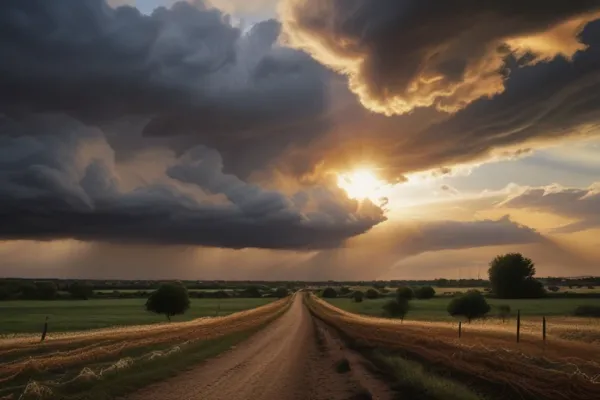
The number of citizens holding parasols has increased on the streets, and the daytime temperature is already exceeding 30 degrees, giving off the heat of early summer. Entering mid-June, the Korean Peninsula is showing the epitome of unpredictable weather, with daytime heat like a hot furnace and sudden downpours of rain. However, there are many reasons why this changeable weather phenomenon cannot be dismissed as simply a natural change in the seasons. The official emergence of ‘El Niño’ heard from the other side of the world proves that the climate crisis we face is no longer a distant future scenario. Today, in the midst of this hot weekend, we stand at a point where we must take a cool-headed look at how the environment surrounding us is rapidly changing.
On the weekend of the 13th and 14th, the highest daytime temperature in most parts of the country soars to 32 degrees, heralding the peak of early summer. Major cities such as Seoul, Daejeon, and Daegu are experiencing premature heat waves to citizens with temperatures exceeding 30 degrees Celsius, which is significantly higher than the average temperature. Not only are temperatures high, but the UV index has also reached the 'very high' level, requiring caution when engaging in outdoor activities. This high temperature phenomenon may be influenced by temporary atmospheric pressure, but it is difficult to deny the fact that the accumulated aftereffects of global warming are underlying it. The news of showers starting from the Jeolla region and expanding to the central region along with the hot sunshine shows a typical summer weather pattern that occurs when the heat in the atmosphere becomes unstable.
The key to this weekend's weather forecast is 'localized heavy rain' and 'sudden weather.' On the 14th, strong showers of up to 20 mm per hour are expected to fall mainly in the metropolitan area, Chungcheong area, and Jeolla area, and this process is likely to be accompanied by gusts of wind, thunder, lightning, and even hail. Meteorologically, this is a phenomenon that occurs when the temperature difference between the upper and lower layers of the atmosphere is large and humidity is high. Due to the nature of showers, the variation in precipitation is expected to be very large even within the same area. Particular attention must be paid to traffic safety during the early morning hours when fog is thick and heavy rain showers make visibility difficult. The reason the Korea Meteorological Administration asks you to check real-time radar images frequently is because local weather changes that fall outside the forecast range have become much more frequent and powerful than in the past.
The instability of meteorological phenomena is not just a problem on the Korean Peninsula. Recently, the Japan Meteorological Agency officially declared the occurrence of an El Niño phenomenon based on the rise in sea surface temperature in the equatorial Pacific Ocean. This is the earliest judgment by any meteorological agency around the world, and climate models are warning that sea surface temperatures in the equatorial Pacific could rise by up to 3.8 degrees Celsius above normal by the end of this year. The emergence of the so-called 'Super El Niño' is the main culprit in raising the average global temperature and increasing the frequency of extreme weather events around the world. The fact that tropical storm activity in the Pacific region is already increasing suggests that El Niño is shaking up the Earth's atmospheric circulation system itself beyond simple changes in sea surface temperature. Changes in these large-scale weather systems will inevitably have a direct impact on the Korean Peninsula's summer precipitation patterns and heat wave intensity.
As the climate crisis becomes a reality, the most powerful weapon we can use to respond is ‘data reliability.’ According to the future outlook released by the Korea Meteorological Administration, in a 'high carbon scenario' without carbon reduction efforts, the risk of domestic forest fires in the second half of this century is expected to surge by more than 40% compared to the current level. In particular, Gangwon Yeongdong and Gyeongbuk regions, combined with a dry climate, are vulnerable to forest fires and are placed in the risk zone of the 'extreme forest fire weather index'. In order to scientifically observe these crisis situations and reflect them in policies, 'meteorological observation standardization' at the national level is essential. This is because AI analysis or use of big data without data reliability is no different from building a castle on sand. Regular testing and systematic management of observation equipment is the most basic and core infrastructure for responding to the climate crisis.
■ Conclusion and analysis outlook
This weekend's hot weather and sudden showers remind us of the climate warnings hidden behind the tranquility of everyday life. Daytime temperatures exceeding 30 degrees, hail pouring down, and news of El Niño coming from the other side of the world prove that we are on the brink of a huge wave called climate change. We must now go beyond simply consuming weather as ‘information of the day’ and seriously consider how climate change will affect our safety, food, and the right to survival of future generations. Making practical efforts toward carbon neutrality based on reliable weather data is the single most sensible response we have under these unpredictable skies.
* This post is an analysis column that is automatically recreated in the style of a current affairs critic's commentary by analyzing real-time Google Trends popular search terms and related major articles.
- 이전글KIA 타이거즈의 고육지책, 황대인 콜업으로 띄운 승부수의 명암 26.06.13
- 다음글법의 저울과 권력의 침묵: 윤석열 전 대통령 징역 30년 판결이 던진 정치적 파장 26.06.13
댓글목록
등록된 댓글이 없습니다.