
Turbulent Korean politics and fluctuating social trust: from election …
페이지 정보

본문
Korea's turbulent politics and fluctuating social trust: from election controversies to geopolitical crises
Written on: June 13, 2026 | Column by current affairs critic specializing in IT/media
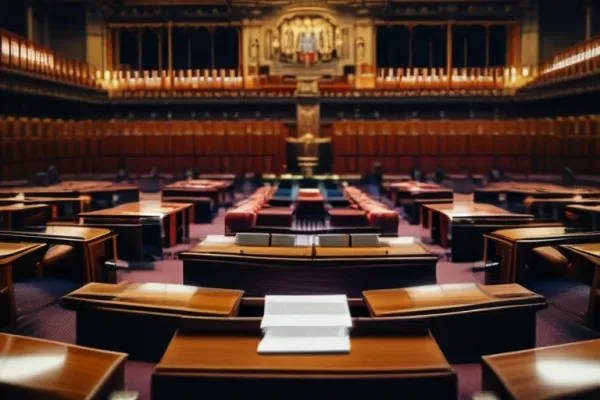
Trust in modern society is like walking on thin ice. When even the most basic and sacred ritual of democracy, voting, is shaken due to technical defects and administrative inexperience, the sense of loss felt by citizens goes beyond simple discomfort and often leads to skepticism about the entire system. The recent shortage of ballot papers for the 9th National Simultaneous Local Elections and the resulting political conflict are raising serious questions about how our society can ensure transparency in democratic procedures and what kind of resilience it should show in times of crisis. At the same time, the changes in the security landscape of the Korean Peninsula, represented by North Korea’s ‘two nation theory’, and the public’s interest in cultural diversity reflect the complex times we face.
The shortage of ballot papers that occurred at the election site caused serious cracks in the exercise of suffrage, which is the foundation of democracy. According to the testimony of observers who attended the polling place, the voting process, which should have been solemn, degenerated into a scene that incited citizens' anger due to poor management. The political world is continuing a fierce battle over this, calling for the introduction of a special prosecutor and the abolition of the National Election Commission. In particular, the opposition party is calling for an intensive investigation, citing the fact that the three broadcasting companies' announcement of exit polls before the end of voting violated the Public Official Election Act. This conflict goes beyond simply considering the pros and cons of the election results, and can be seen as stemming from a fundamental distrust in the fairness and reliability of the national election management agency.
Looking at overseas cases, we can see that errors in election administration do not necessarily lead to political catastrophe. Past cases such as the invalidity of an election in Berlin, Germany or the confusion at polling places in Pennsylvania, USA, demonstrated the process of transparently disclosing administrative mistakes and correcting system flaws through independent investigation and system improvement. In the case of Korea, many point out that the past behavior of the National Election Commission, which was busy avoiding responsibility by hiding behind the justification of independence, has increased public anger. There are growing voices calling for the inexperience in election management not to be dismissed as simply a technical error, but to use this as a turning point for institutional innovation and strengthening transparency.
The geopolitical environment surrounding the Korean Peninsula is also turbulent. As North Korea seeks constitutional change by defining inter-Korean relations as ‘two hostile countries,’ interpretations surrounding the existing armistice agreement and the Northern Limit Line (NLL) in the West Sea have entered a new phase. The United Nations Command maintains the position that these changes do not directly affect the legal validity of the Armistice Agreement or the performance of its mission. However, experts are wary of North Korea's strategic intention to lay the ground for future military provocations by intentionally leaving the boundaries of its territory and territorial waters ambiguous. As the existing unification-oriented view of North Korea clashes with the new reality of hostile coexistence, cool-headed discussions on the stable management of the armistice system and national security are becoming more urgent within Korean society.
Even among the heavy topics of politics and security, popular culture is becoming a channel for social healing and communication. The reason content such as Netflix's ‘Black and White Chef’ has a global resonance is because the harmony of the values of skill and respect, regardless of class and background, provides catharsis to the public. The relationship of leadership and trust shown by Choi Hyun-seok and Edward Lee has significant implications for the real-life political world riddled with conflict and antagonism. Listening to the opinions of others and collaborating based on trust for the team's goals rather than being stubborn is a dignified attitude that all members of society should think about. In this way, cultural achievements play an important role in consoling the pain of the times and uniting the hearts of scattered citizens.
■ Conclusion and analysis outlook
Ultimately, the conflict facing our society comes down to one keyword: ‘restoration of trust.’ Ensuring full citizens' right to vote by increasing the transparency of election management, maintaining an unwavering security stance even in geopolitical crises, and promoting social integration through cultural exchange are all possible only on the foundation of trust. As the saying goes, the regime is short and the people are eternal, so it is time for institutional supplementation and mature civic consciousness for the future rather than the current political battle. In order to find a path to coexistence beyond conflict, it will be most important to make efforts to practice the values of transparent communication and mutual respect in each individual's place.
* This post is an analysis column that is automatically recreated in the style of a current affairs critic's commentary by analyzing real-time Google Trends popular search terms and related major articles.
- 이전글고금리의 파고가 다시 몰려온다: 케빈 워시의 연준과 신현송의 한은이 그리는 긴축의 지도 26.06.13
- 다음글‘바람의 손자’를 넘어 ‘메이저리그의 아이콘’으로, 이정후가 쓴 18경기 연속 안타의 신화 26.06.13
댓글목록
등록된 댓글이 없습니다.